Choosing between epoxy and polyaspartic coatings depends on your budget, timeline, and exposure to sunlight. Epoxy offers a cost-effective, durable option for indoor spaces, while polyaspartic provides superior UV stability and faster cure times. Formula Concrete Coating Austin helps homeowners select the right system for their specific garage conditions and aesthetic goals.
Understanding the Core Chemistry
Epoxy coating is a two-part system consisting of a resin and a hardener that cures to form a hard, durable plastic surface. It is known for its excellent adhesion and chemical resistance. This classic technology has been the standard for residential garages for decades due to its balance of cost and performance.
Polyaspartic coating is a high-performance resin system that cures significantly faster than traditional epoxy. It is a type of aliphatic polyurethane that offers superior UV stability and flexibility. Unlike standard epoxy, which can yellow or chalk over time when exposed to UV rays, polyaspartic maintains its color integrity for years. The fast cure time allows homeowners to use their garage within 24 hours of installation, minimizing disruption to their daily routine.
The chemical structure of polyaspartic makes it more flexible than epoxy. This flexibility helps the coating handle temperature swings and minor substrate movement without cracking. For Austin homeowners, this means a floor that stays looking new despite the region's unique environmental challenges.
Cure Time and Project Timeline
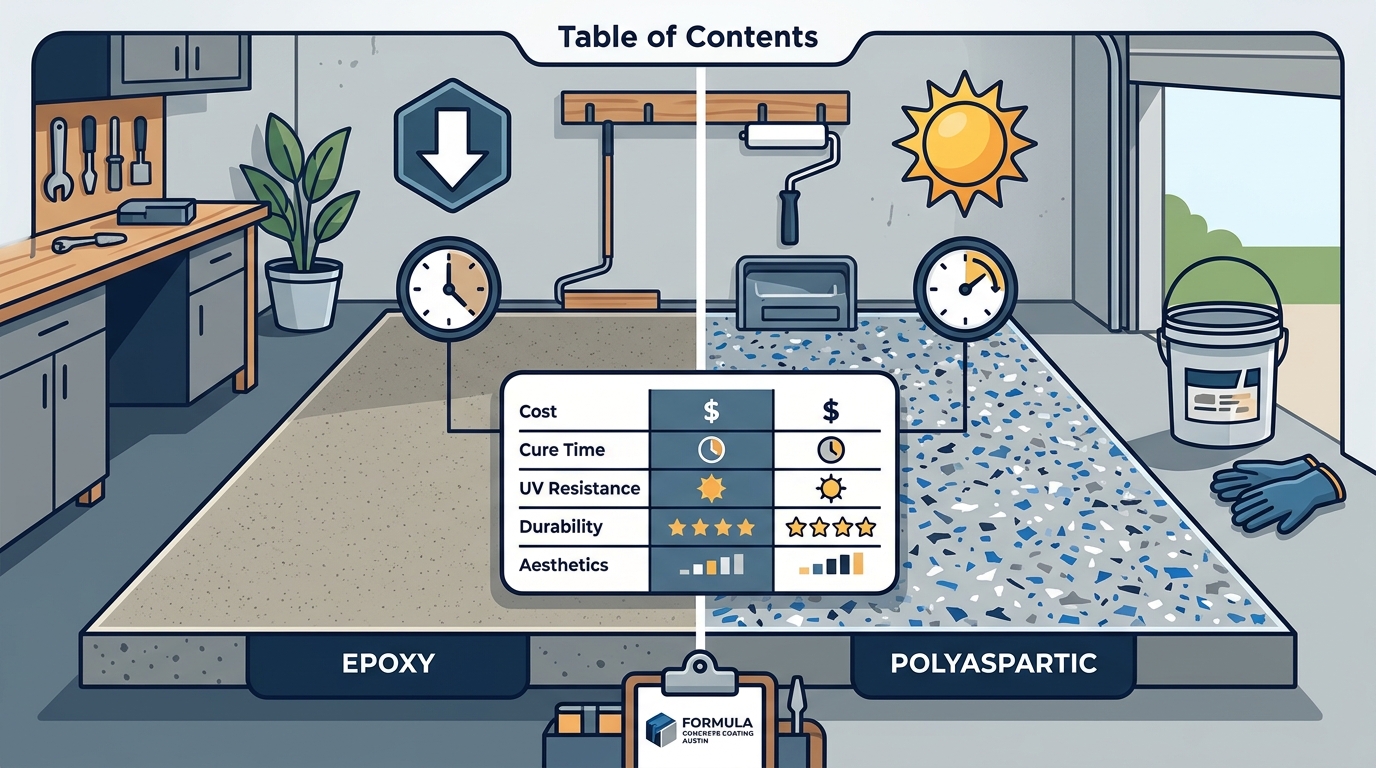
One of the most practical differences between these two systems is the installation timeline. Epoxy systems typically require several days to fully cure. You must wait for the base coat to dry before applying flakes or a topcoat, and then wait again for the final layer to harden. This multi-day process can be a significant inconvenience if you rely on your garage for daily vehicle storage or as a workspace.
Polyaspartic systems cure much faster. Many polyaspartic topcoats are walkable within 24 hours. This rapid cure is a primary driver of its value for busy homeowners. If you need your garage back in service quickly, polyaspartic is the clear winner. The fast set time also means that professional installation is critical, as the working window for the installer is shorter.
For a standard two-car garage, an epoxy project might take three to four days from start to finish. A polyaspartic project can often be completed in one to two days. This difference in timeline is a key factor when planning your home improvement schedule.
UV Stability and Aesthetic Longevity
UV stability is a critical factor for garage floors, especially if your garage door is open frequently or if the space receives direct sunlight. Epoxy coatings are susceptible to UV damage. Over time, exposure to sunlight can cause epoxy to yellow, fade, or chalk. This degradation affects the appearance of the floor and can reduce its lifespan.
Polyaspartic coatings are UV stable. They will not yellow or fade in sunlight. This makes them an ideal choice for garages that are used as workshops, gyms, or showrooms where the door is often open. The high gloss and clarity of polyaspartic finishes also make them ideal for decorative applications. If you want a floor that looks new for years, polyaspartic is the better choice.
However, if your garage is fully enclosed and never sees direct sunlight, the UV stability of polyaspartic may not be as critical. In this case, the cost difference between the two systems becomes a more significant factor in your decision.
Cost Considerations and Value
Epoxy remains the most popular choice for residential garages due to its balance of cost and performance. Concrete coating prices for residential garages in Austin, Texas, typically range from $4 to $12 per square foot for professional installation. Epoxy systems generally fall on the lower end of this range, making them a budget-friendly option for homeowners.
Polyaspartic systems are more expensive than epoxy. The higher cost is due to the advanced chemistry and faster cure time. However, the added cost often pays off in longevity and ease of installation. For many homeowners, the value of a polyaspartic floor justifies the higher upfront investment. The durability of polyaspartic systems is a primary driver of their value. These coatings resist chemical spills, tire marks, and heavy impact from vehicles.
When comparing costs, it is important to consider the total project cost, including surface preparation. Surface preparation is the single most critical factor in determining the final cost of your garage floor project. A professional installer cannot simply paint over existing concrete. The substrate must be sound, clean, and properly profiled to ensure the coating adheres correctly. If the concrete is in poor condition, the preparation phase will require more time, labor, and materials, which directly impacts the price.
Choosing the Right System for Your Garage
The best choice between epoxy and polyaspartic depends on your specific needs. For a budget-conscious homeowner looking to upgrade their garage floor, epoxy is a solid choice. It provides a durable and attractive finish at a budget-friendly price. Epoxy is great for a garage that isn’t exposed to a lot of moisture or direct sunlight.
For homeowners who prioritize speed, UV stability, and long-term aesthetics, polyaspartic is the superior option. It is perfect for garages that are used as multi-purpose spaces or that are exposed to sunlight. The flexibility of polyaspartic also helps prevent cracks from concrete expansion and contraction. This makes it a better choice for garages with older concrete slabs that may have settled or cracked due to soil movement.
At Formula Concrete Coating Austin, we offer both epoxy and polyaspartic systems. Our team will assess your garage's condition, your budget, and your aesthetic preferences to recommend the best solution. We use premium Sherwin-Williams products that are UV stable and designed for long-lasting performance. Our 4-point surface preparation process ensures that your new coating adheres correctly and lasts for years.
Key Takeaways
- Epoxy is a cost-effective, durable option for indoor garage floors.
- Polyaspartic offers superior UV stability and faster cure times.
- Polyaspartic floors are walkable within 24 hours, minimizing disruption.
- Epoxy can yellow or fade when exposed to direct sunlight.
- Surface preparation is the most critical factor in coating longevity.
- Polyaspartic is more expensive but offers better long-term value for many homeowners.
- Choose a professional installer with experience in both systems.
Frequently Asked Questions
Is polyaspartic better than epoxy for garage floors?
Polyaspartic is generally better for garages exposed to sunlight or for homeowners who need a fast cure time. Epoxy is a good choice for budget-conscious homeowners with enclosed garages.
How long does it take to install a polyaspartic garage floor?
Most polyaspartic installations are completed within one to two days. The floor is typically walkable within 24 hours.
Can I use my garage while the epoxy is curing?
No, you should not use your garage while the epoxy is curing. Epoxy systems typically require several days to fully cure.
What is the cost difference between epoxy and polyaspartic?
Polyaspartic is more expensive than epoxy. The exact cost difference depends on the specific products used and the size of your garage.
Do polyaspartic coatings crack easily?
No, polyaspartic coatings are highly flexible and less likely to crack than epoxy. This makes them a good choice for garages with older concrete slabs.
How do I maintain a coated garage floor?
Maintaining a coated garage floor is easy. Regular sweeping and occasional mopping with mild detergent is all it takes.
Conclusion
Choosing between epoxy and polyaspartic coatings is a personal decision based on your budget, timeline, and aesthetic preferences. Both systems offer durable, attractive finishes that can transform your garage. By understanding the key differences in chemistry, cure time, and UV stability, you can make an informed decision that meets your needs. Formula Concrete Coating Austin is here to help you choose the right system for your home. today for a free consultation and quote.