Proper concrete preparation is the single most critical factor in ensuring an epoxy garage floor coating adheres correctly and lasts for years. Without a clean, sound, and properly profiled substrate, even the highest-quality resin will fail. In Austin, where temperature swings and humidity affect curing, skipping prep steps leads to peeling, bubbling, and premature wear. Formula Concrete Coating Austin emphasizes that the foundation determines the finish.
The Science of Adhesion and Substrate Integrity
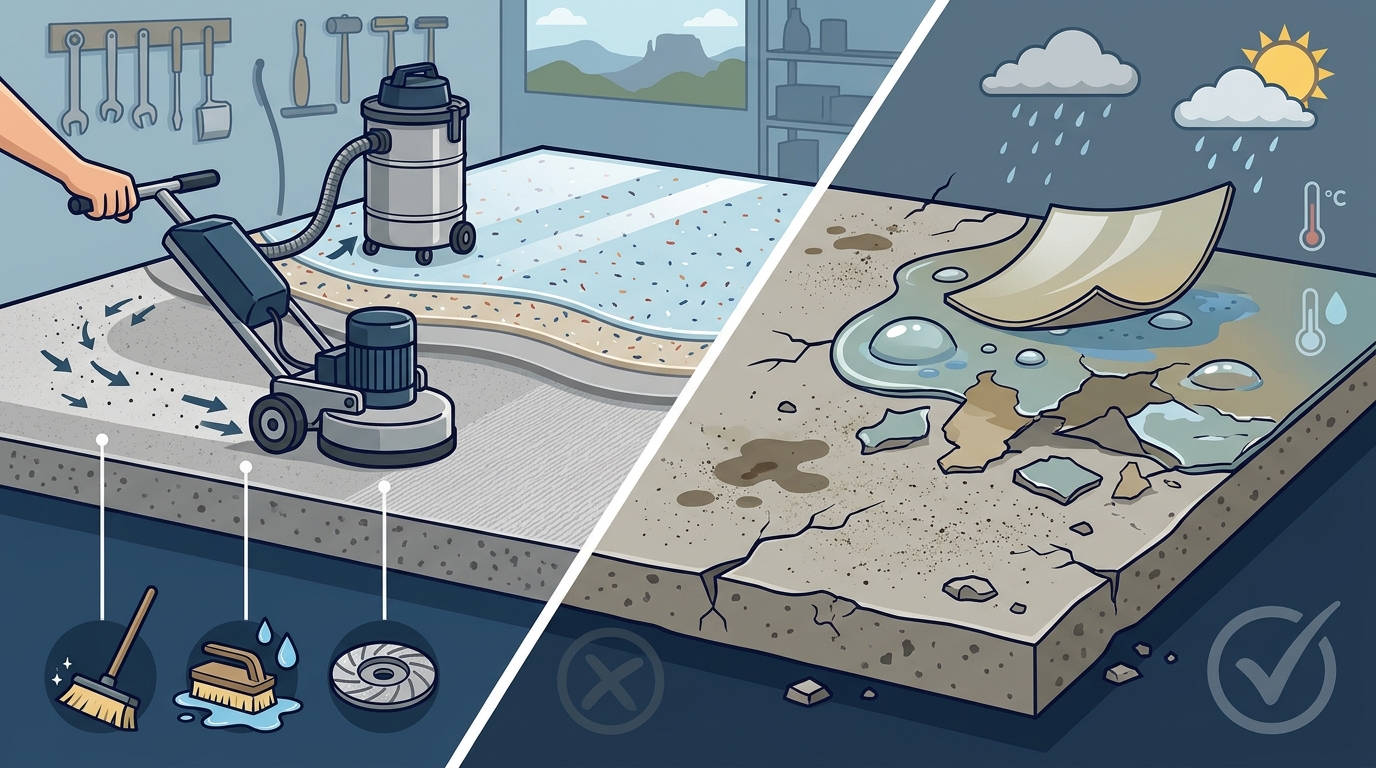
Adhesion is the mechanical and chemical bond between the coating and the concrete surface. Epoxy resins do not bond to dust, oil, or sealed surfaces. They require a rough, open-pore profile to lock into the concrete matrix. In Austin, many older homes have concrete floors that have been sealed, waxed, or exposed to heavy vehicle traffic. These conditions create a barrier that prevents proper bonding. If the substrate is not mechanically abraded to remove these contaminants, the coating will act like a sticker on a dirty window. It may look fine initially, but it will eventually lift under stress.
Austin Climate Challenges: Humidity and Heat
Austin’s climate presents unique challenges for concrete coatings. The city experiences high humidity levels and significant temperature fluctuations between day and night. Moisture Vapor Emission (MVE) is the movement of water vapor from the concrete slab through the coating. If the concrete is not properly prepared and tested for moisture, trapped vapor can cause the epoxy to bubble or delaminate. Formula Concrete Coating Austin utilizes moisture testing as a standard part of their 4-point surface preparation process. This ensures that the slab is dry enough to accept the coating. Ignoring this step in a humid environment like Austin is a recipe for failure.
Diamond Grinding: The Gold Standard for Prep
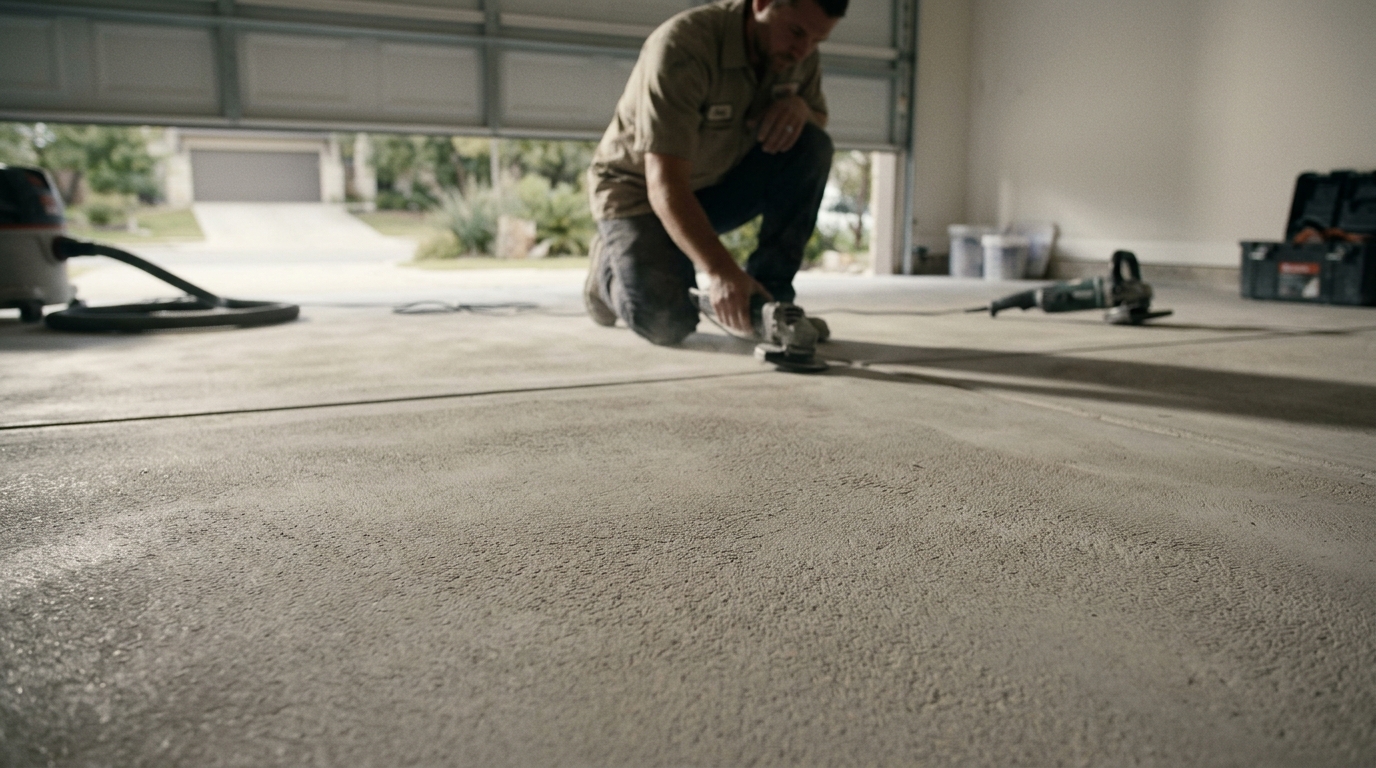
Diamond grinding is the process of using industrial grinders with diamond-tipped segments to abrade the concrete surface. This method is superior to shot blasting or acid etching because it provides a consistent, uniform profile. It removes laitance, the weak layer of cement and water that forms on the surface of new concrete. It also opens the pores of the concrete, allowing the primer and epoxy to penetrate deeply. For a garage floor in Austin, where vehicles and tools create impact stress, this mechanical profile is essential. It creates a