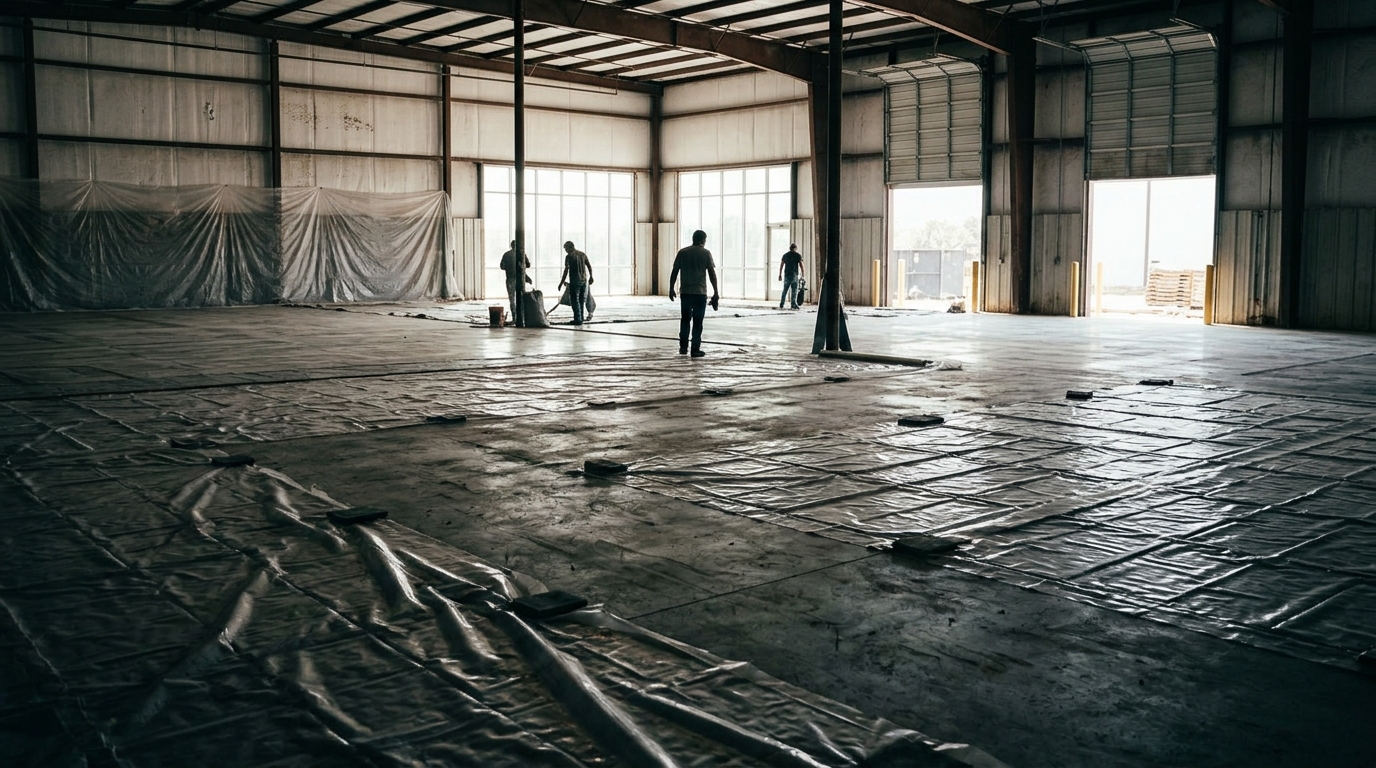
Moisture barriers protect industrial concrete floors in Austin by blocking subsurface water vapor from migrating upward, which prevents coating delamination and surface blistering. In the humid Texas climate, this protection is critical for maintaining the structural integrity and aesthetic finish of high-traffic commercial spaces. Integrating these protective layers during installation helps ensure long-term durability for local businesses.
The Austin Climate Challenge
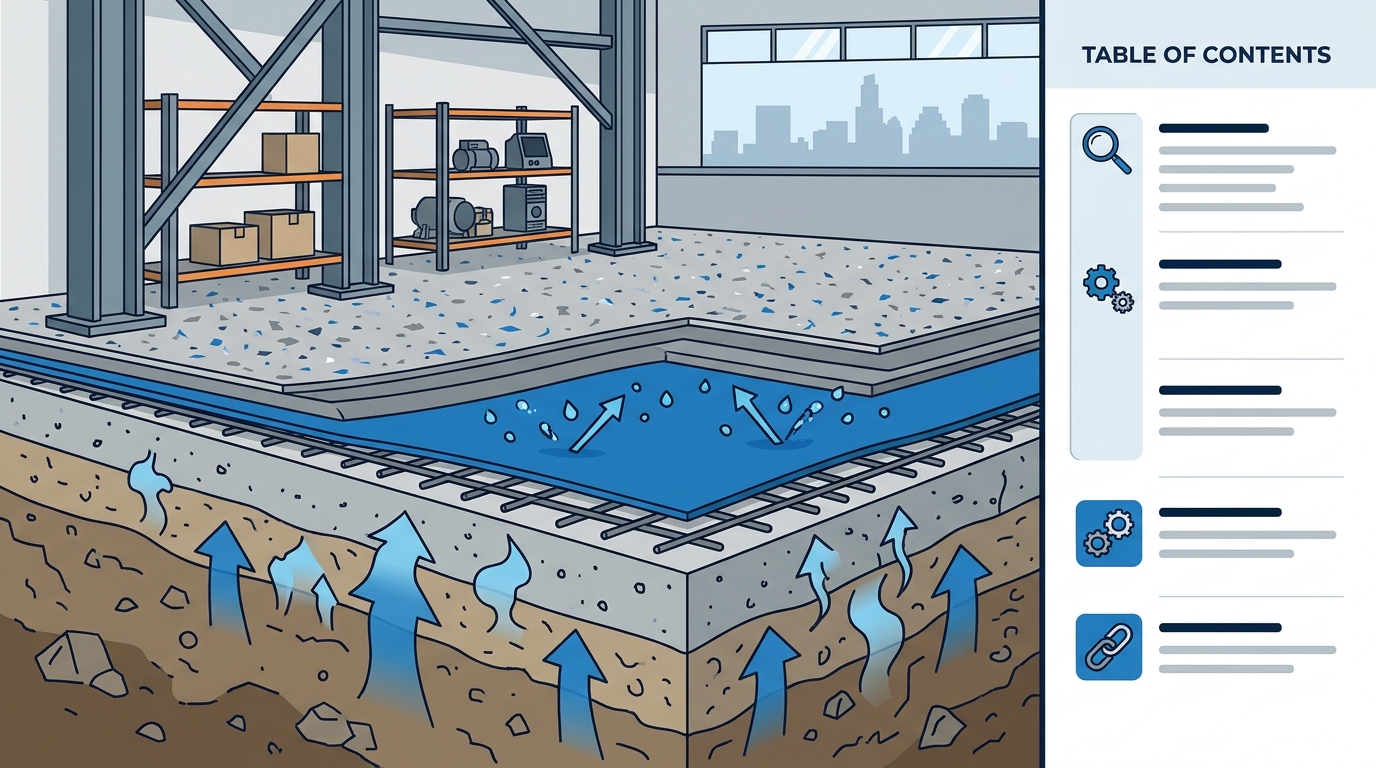
Austin experiences significant seasonal humidity fluctuations that directly impact concrete performance. The city's climate features high moisture levels in the summer and variable precipitation that saturates the soil beneath slab foundations. This environmental pressure creates a constant drive for water vapor to escape through the concrete slab. Without a proper barrier, this vapor pressure builds up beneath any applied coating system.
Understanding Moisture Vapor Emission
Moisture Vapor Emission (MVE) is the rate at which water vapor moves from the subgrade soil through the concrete slab to the surface. This natural process occurs because concrete is a porous material that allows gas and liquid transmission. In industrial settings, high MVE levels can compromise the bond between the concrete and the protective coating layer.
Standard testing methods, such as the Calcium Carbide test or Relative Humidity test, measure this emission to determine if a slab is ready for coating. If the MVE exceeds specific thresholds, applying a standard epoxy or polyaspartic system without a moisture mitigation strategy will likely lead to failure. Understanding these metrics allows contractors to select the appropriate barrier technology for the specific site conditions.
How Moisture Barriers Function
A moisture barrier is a specialized coating or membrane applied to the concrete surface that acts as a vapor retarder. It creates a physical or chemical block that prevents water vapor from passing through the substrate. These barriers are typically applied before the final decorative or protective topcoat. They serve as a sacrificial or functional layer that manages the vapor pressure.
There are two primary types of barriers used in industrial applications. The first is a penetrating sealer, which chemically reacts with the concrete to reduce porosity. The second is a film-forming barrier, which creates a continuous skin on the surface. Both methods effectively lower the MVE rate to a level compatible with the final coating system. This ensures that the topcoat adheres properly and remains intact over time.
Industrial Applications in the Region
Industrial facilities in Austin, such as distribution centers and light manufacturing plants, require flooring systems that withstand heavy loads and chemical exposure. These environments often have slabs that are in direct contact with the ground, making them susceptible to moisture intrusion. A robust moisture barrier system is essential to protect the investment in high-performance coatings like polyaspartic or epoxy systems.
Professional installers utilize high-grade products to address these specific challenges. A proper approach includes thorough surface preparation and the application of compatible barrier systems. This ensures that the final floor can handle the rigors of industrial use while remaining protected from the local climate. The integration of these barriers extends the lifespan of the flooring and reduces long-term maintenance costs.
Preparation and Testing Protocols
Effective moisture barrier installation begins with rigorous slab testing and preparation. Contractors must verify the moisture content of the concrete before applying any barrier product. This step is non-negotiable for ensuring the success of the project. Proper preparation also involves grinding the surface to open the pores of the concrete, allowing the barrier to penetrate or bond effectively.
Skipping these steps can lead to premature failure, even with high-quality materials. A professional assessment determines whether a penetrating sealer or a film-forming barrier is the correct choice for the specific MVE levels detected. This data-driven approach minimizes risk and ensures that the industrial floor performs as intended for years to come.
Key Takeaways
- Moisture barriers prevent water vapor from migrating through concrete slabs, protecting coatings from delamination.
- Austin's humid climate increases the risk of moisture-related floor failures in industrial facilities.
- Moisture Vapor Emission (MVE) testing is required to determine the appropriate barrier type for a specific slab.
- Film-forming barriers create a physical skin, while penetrating sealers chemically reduce porosity.
- Proper surface preparation, including grinding, is essential for barrier adhesion and effectiveness.
- Industrial floors in the region benefit from integrated barrier systems to extend coating lifespan.
- Professional assessment ensures the selected barrier matches the specific moisture conditions of the site.
Frequently Asked Questions
What is a moisture barrier in concrete flooring?
A moisture barrier is a specialized coating or membrane applied to concrete that prevents water vapor from migrating through the slab. It acts as a protective layer between the concrete substrate and the final floor coating. This prevents issues like peeling and bubbling caused by trapped moisture.
Why is moisture a bigger issue in Austin?
Austin's climate features high humidity and variable rainfall, which saturates the soil beneath concrete slabs. This creates a strong vapor pressure that drives moisture upward through the concrete. The local environmental conditions make moisture management a critical component of any flooring project.
How do you test for moisture in concrete?
Contractors use standardized tests such as the Calcium Carbide test or Relative Humidity (RH) test to measure moisture levels. These tests quantify the rate of water vapor emission from the slab. The results determine if a moisture barrier is necessary and which type is most effective.
Can you apply a coating over a moisture barrier?
Yes, moisture barriers are designed to be compatible with subsequent coating systems. The barrier is applied first, followed by the primer and final topcoat. This layered approach ensures that the final coating adheres to the barrier rather than the raw concrete, preventing failure.
How long does a moisture barrier last?
The lifespan of a moisture barrier depends on the product type and the specific environmental conditions. Generally, a properly installed barrier lasts as long as the final coating system. Regular maintenance and inspection can help ensure the barrier continues to function effectively over time.
Are moisture barrier solutions recommended for industrial projects in Austin?
Yes, moisture mitigation strategies are essential for industrial and commercial concrete projects in Austin. Professional installation includes performing necessary testing and applying appropriate barrier systems to ensure the longevity of the coatings in the local climate.
Conclusion
Protecting industrial concrete floors in Austin requires a proactive approach to moisture management. By understanding the local climate challenges and implementing proper barrier systems, facility owners can ensure the longevity and performance of their flooring. Professional guidance and installation services help address these specific needs for long-lasting flooring performance.