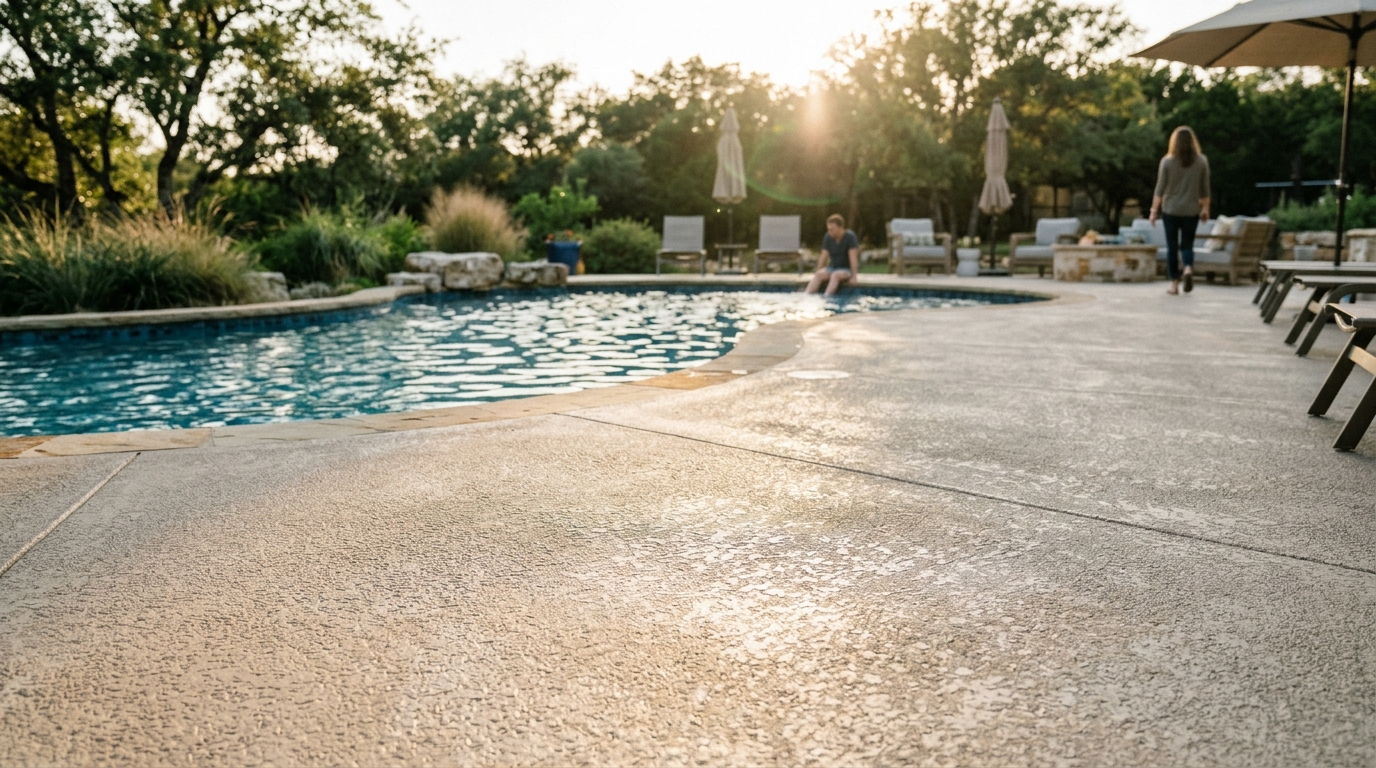
Choosing the right pool deck coating in Austin requires balancing aesthetics with safety. Slip resistance is a critical factor, especially given the region's frequent rain and high humidity. Formula Concrete Coating Austin prioritizes safety by offering coatings that meet or exceed industry standards for wet traction. This guide outlines the five key slip resistance ratings and specifications you should look for to ensure a safe, durable pool deck.
1. Coefficient of Friction (COF) of 0.6 or Higher
Aim for a wet COF rating of at least 0.6 to meet ADA compliance. The Coefficient of Friction (COF) is a numerical value that measures the traction between a surface and a shoe sole. For pool decks, a wet COF of 0.6 is the minimum standard recommended by the Americans with Disabilities Act (ADA) to prevent slips. In Austin, where pool decks are frequently wet, selecting a coating that consistently achieves this rating is essential for safety.
2. Dynamic Friction Coefficient (DFT) Testing
Verify that the coating has been tested using the Dynamic Friction Coefficient method. Dynamic Friction Coefficient (DFT) is a testing method that simulates the actual motion of a person walking on a surface. Unlike static tests, DFT accounts for the sliding motion that occurs during a slip. Reputable manufacturers provide DFT data to prove that their polyaspartic or epoxy systems maintain grip under real-world conditions.
3. Textured Aggregate and Chip Blends
Look for coatings that incorporate textured aggregates or chip blends for added grip. Many high-performance pool deck coatings use broadcast aggregates or chip blends to create a textured surface. These physical textures increase the surface area and provide mechanical grip, which is crucial for bare feet. Formula Concrete Coating Austin offers various color blends that include these textures, ensuring both visual appeal and enhanced slip resistance.
4. Non-Slip Clear Topcoats
Apply a non-slip clear topcoat to enhance the base coating's traction. A non-slip clear topcoat is a final layer applied over the base color to add an extra level of grit and protection. This layer not only boosts the slip resistance rating but also shields the underlying coating from UV rays and pool chemicals. In the harsh Texas sun, this topcoat helps maintain the surface texture and color integrity over time.
5. ASTM C1028 Standard Compliance
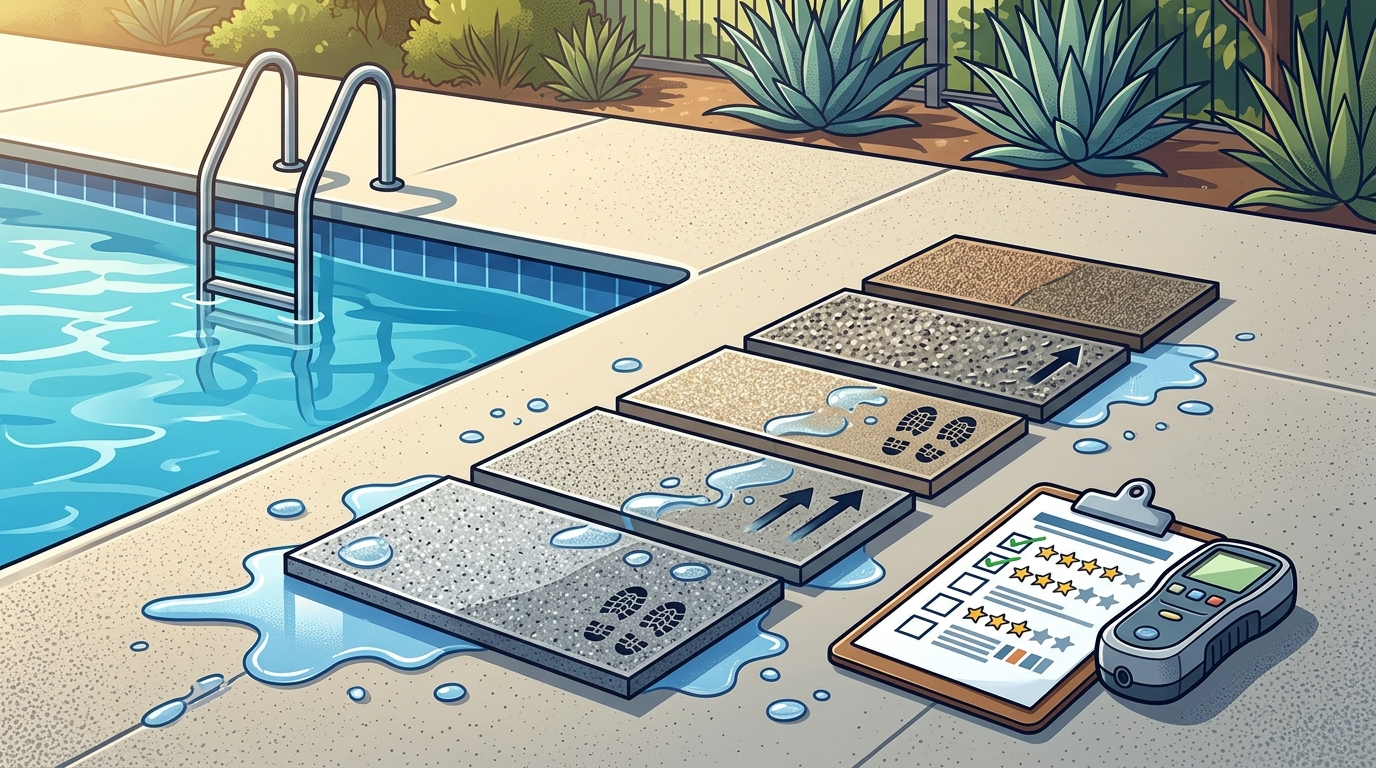
Ensure the coating system complies with ASTM C1028 for standardized friction testing. ASTM C1028 is the standard test method for measuring the static coefficient of friction of rigid material floor surfaces using the ramp method. Compliance with this standard ensures that the slip resistance data provided by the manufacturer is reliable and comparable. When evaluating coatings, ask for ASTM C1028 test results to verify that the product meets the required safety thresholds.
Choosing the Right Rating for Your Austin Pool
Selecting the appropriate slip resistance rating depends on your specific usage patterns and local climate. For most residential pools in Austin, a combination of a textured base coat and a non-slip topcoat provides the best balance of safety and aesthetics. Always request test data from your contractor to ensure the final installation meets the necessary safety standards.
Frequently Asked Questions
What is the minimum slip resistance rating for a pool deck?
The minimum recommended slip resistance rating for a pool deck is a wet Coefficient of Friction (COF) of 0.6. This standard is widely accepted to ensure safety for bare feet on wet surfaces. Meeting this threshold helps prevent accidents and complies with general accessibility guidelines.
How does Austin's climate affect pool deck slip resistance?
Austin's climate, characterized by high humidity and frequent rain, can make pool decks slippery. Coatings with higher slip resistance ratings and textured surfaces perform better in these conditions. UV exposure also affects coatings, so choosing UV-stable products helps maintain the surface texture and grip over time.
Can I add slip resistance to an existing pool deck coating?
In many cases, you can apply a non-slip topcoat over an existing coating to improve traction. However, the surface must be properly prepared to ensure adhesion. It is best to consult with a professional to assess the condition of the existing coating before adding a new layer.
What is the difference between static and dynamic friction testing?
Static friction testing measures the force required to start movement, while dynamic friction testing measures the force during sliding. Dynamic testing is more relevant for pool decks because it simulates the actual motion of a slip. Manufacturers should provide both types of data for a complete safety profile.
How long does a slip-resistant pool deck coating last?
A high-quality slip-resistant pool deck coating can last for many years with proper maintenance. Factors such as UV exposure, chemical use, and foot traffic affect longevity. Regular cleaning and avoiding harsh chemicals help preserve the surface texture and slip resistance properties.
Where can I find a professional to install slip-resistant pool deck coatings in Austin?
Formula Concrete Coating Austin specializes in high-quality pool deck coatings with a focus on safety and durability. They offer a range of textured and non-slip options tailored to the local climate. To discuss your project, you can contact our team for a free quote. Learn more: Reviews from Multiple Website.