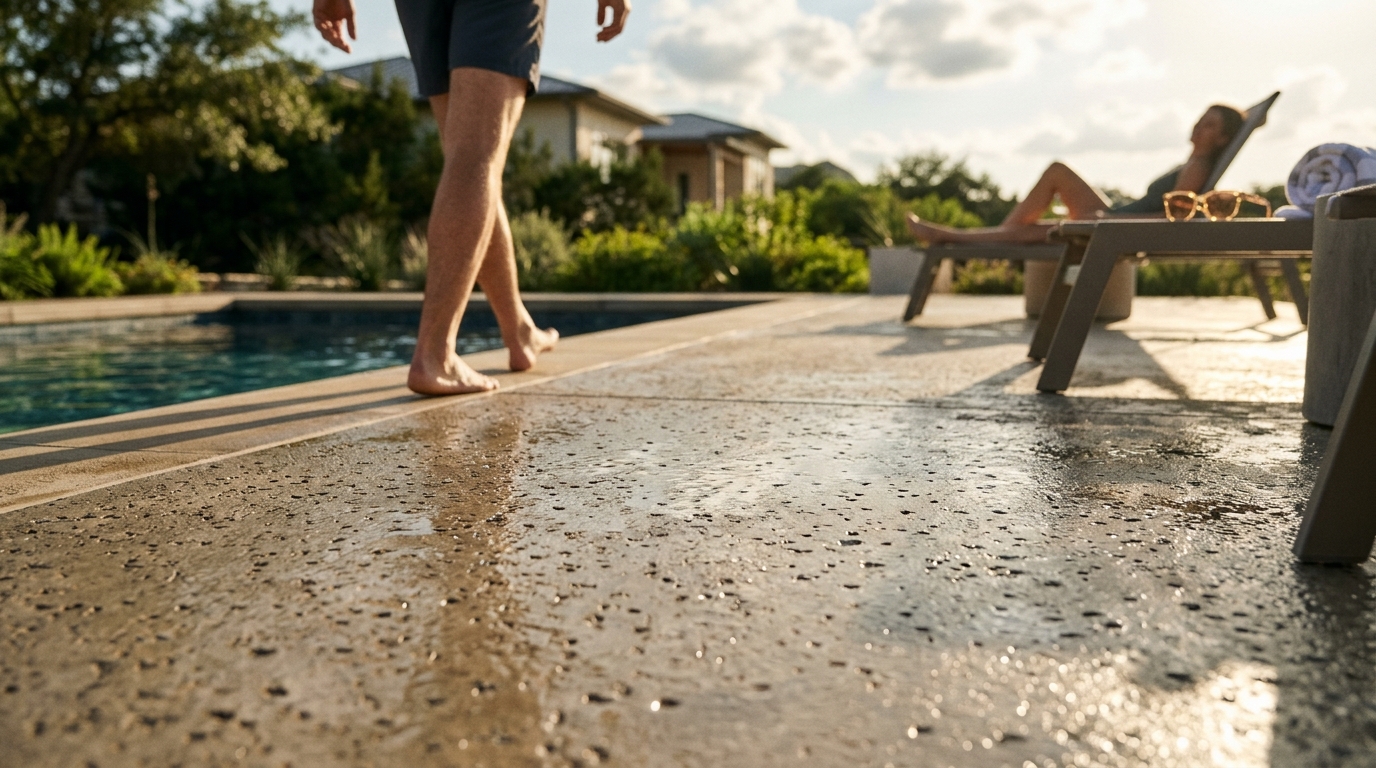
For pool decks in Austin, a static coefficient of friction (SCOF) of 0.60 or higher is the recommended baseline for wet conditions. This rating ensures adequate traction for bare feet on wet surfaces, which is critical given the high humidity and frequent rain in the Texas Hill Country. Formula Concrete Coating Austin prioritizes these safety metrics in every pool deck project to prevent slips and falls.
Understanding Slip Resistance Metrics
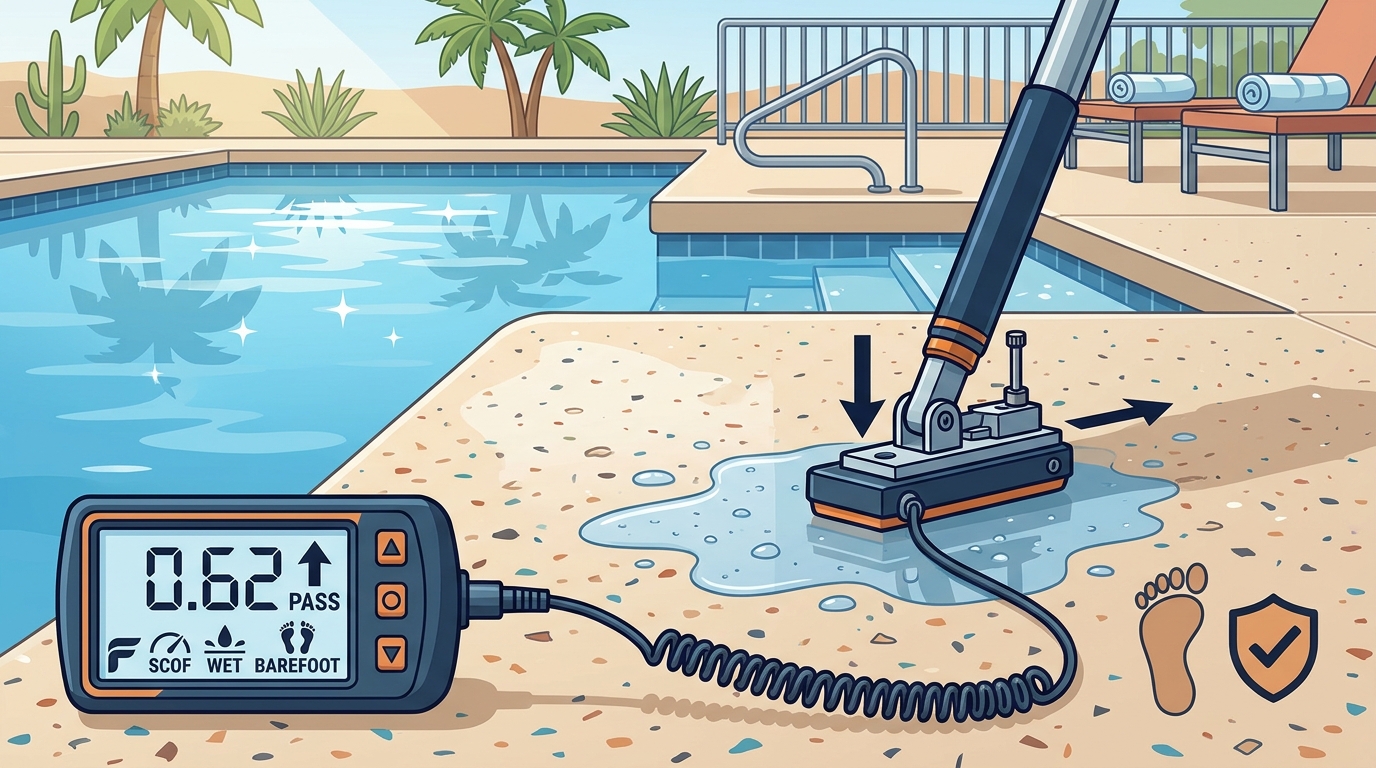
Slip resistance is a measure of the friction between a surface and a foot or shoe. In the context of pool decks, the primary metric is the static coefficient of friction, or SCOF. SCOF is the ratio of the force required to start an object moving across a surface to the force pressing it down. For wet pool decks, a higher SCOF value indicates better grip and lower slip risk.
Industry standards often reference the American National Standards Institute (ANSI) A126.3 standard. This standard defines slip resistance levels for wet surfaces. A rating of 0.42 is often considered the minimum for general wet areas, but pool decks require a higher threshold due to the presence of bare feet and water. A SCOF of 0.60 is widely accepted as the safety benchmark for residential and commercial pool decks.
It is important to distinguish between static and dynamic friction. Static friction applies when the foot is stationary, while dynamic friction applies during movement. While dynamic friction is technically more relevant to walking, SCOF remains the standard for specification and testing in the coatings industry. Formula Concrete Coating Austin uses textured finishes to achieve these necessary friction levels without compromising the aesthetic appeal of the deck.
Austin Climate and Surface Safety
The Austin climate presents unique challenges for pool deck safety. High humidity levels mean that pool decks often remain damp even when it is not raining. This persistent moisture reduces friction on smooth concrete surfaces. Additionally, the intense Texas sun can cause thermal expansion and contraction of concrete, leading to micro-cracks that may affect surface integrity over time.
Algae growth is another significant factor in the Austin area. Warm temperatures and moisture create an ideal environment for algae, which can make surfaces dangerously slick. A high-quality pool deck coating acts as a barrier against algae penetration. By sealing the concrete, the coating prevents organic growth from embedding into the pores of the slab. This not only maintains the slip resistance rating but also simplifies cleaning.
Formula Concrete Coating Austin designs its pool deck systems with these local conditions in mind. The coatings are formulated to be UV stable, ensuring that the color and texture do not degrade under the harsh Texas sun. This stability is crucial for maintaining the slip resistance profile over the life of the coating. A surface that fades or degrades may lose its textured grip, posing a safety hazard.
Choosing the Right Textured Finish
Not all pool deck coatings offer the same level of slip resistance. The finish type plays a critical role in achieving the desired SCOF rating. Smooth, high-gloss finishes are generally not recommended for pool decks because they become extremely slippery when wet. Instead, textured finishes are the standard for safety.
Flake systems are a popular choice for achieving high slip resistance. These systems involve broadcasting colored chips or flakes into the wet coating. The size and shape of the flakes determine the level of texture. Larger flakes generally provide a more pronounced texture and higher SCOF rating. Formula Concrete Coating Austin offers a variety of flake blends, including sandstone and marble options, that balance aesthetics with safety.
Broomed or troweled finishes are another option. These finishes create a directional texture that provides good traction. However, they may not offer as high a SCOF rating as flake systems. For high-traffic commercial pools or decks with significant slope, a flake system is often the preferred choice. The key is to select a finish that meets the 0.60 SCOF threshold while matching the visual style of the home or facility.
Testing and Verification of Slip Ratings
Verifying the slip resistance of a pool deck coating is essential for ensuring safety. Manufacturers provide SCOF ratings for their products, but these ratings are based on controlled laboratory conditions. Real-world performance can vary based on surface preparation, application technique, and environmental factors. It is advisable to request test data from the coating manufacturer to confirm that the product meets the required safety standards.
Formula Concrete Coating Austin uses premium, proven products that are tested for slip resistance. The company exclusively uses commercial and industrial-grade coatings that are UV stable and designed for long-lasting performance. By partnering with trusted manufacturers, Formula ensures that the coatings applied to your pool deck meet or exceed industry safety standards. This commitment to quality is part of the company's highest quality, lowest price guarantee.
Regular maintenance is also important for preserving slip resistance. Over time, dirt, debris, and biological growth can reduce the effective friction of a textured surface. Regular cleaning with a mild detergent and a stiff brush can help maintain the texture and safety of the deck. Avoid using harsh chemicals or abrasive tools that may damage the coating. Proper care ensures that the slip resistance rating remains consistent over the years.
Benefits of Professional Installation
Professional installation is critical for achieving the specified slip resistance rating. Surface preparation is the most important step in the coating process. If the concrete is not properly cleaned, ground, and repaired, the coating may not adhere correctly. Poor adhesion can lead to peeling or delamination, which compromises both the durability and the safety of the deck.
Formula Concrete Coating Austin follows a meticulous four-point surface preparation process. This includes moisture testing, diamond grinding, crack repair, and thorough cleaning. This process ensures that the coating bonds securely to the concrete substrate. A well-prepared surface is the foundation of a long-lasting, safe pool deck. The company's expert, manufacturer-trained installers ensure that the coating is applied evenly and at the correct thickness.
Choosing a professional installer also provides peace of mind regarding warranties. Formula Concrete Coating Austin stands behind its work with comprehensive warranties on materials and workmanship. This warranty covers defects resulting from faulty materials or improper installation. By hiring a reputable local contractor, you protect your investment and ensure that your pool deck meets safety standards for years to come.
Key Takeaways
- A static coefficient of friction (SCOF) of 0.60 or higher is the recommended safety standard for wet pool decks in Austin.
- The Austin climate, with its high humidity and intense sun, requires UV-stable coatings to maintain slip resistance over time.
- Textured finishes, such as flake systems, are essential for achieving high slip resistance on pool decks.
- Algae growth can significantly reduce surface friction, making a sealed, non-porous coating a critical safety feature.
- Professional surface preparation, including diamond grinding and crack repair, is vital for ensuring proper coating adhesion and long-term safety.
- Formula Concrete Coating Austin uses premium, tested products to ensure that every pool deck project meets industry safety standards.
Frequently Asked Questions
What is the minimum slip resistance rating for a pool deck?
The minimum recommended slip resistance rating for a wet pool deck is a static coefficient of friction (SCOF) of 0.60. This rating ensures adequate traction for bare feet and helps prevent slips and falls.
How does the Austin climate affect pool deck safety?
The high humidity and frequent rain in Austin keep pool decks damp, reducing friction on smooth surfaces. Additionally, the intense sun can degrade coatings that are not UV stable, potentially affecting their texture and slip resistance over time.
Can I use a smooth finish on my pool deck?
Smooth, high-gloss finishes are generally not recommended for pool decks because they become extremely slippery when wet. Textured finishes, such as flake systems or broomed finishes, are preferred for their superior slip resistance.
How often should I clean my pool deck to maintain slip resistance?
Regular cleaning is important to maintain slip resistance. Sweeping or hosing down the deck weekly and scrubbing with a mild detergent monthly can help remove dirt and algae that may reduce surface friction.
Does Formula Concrete Coating Austin offer warranties on pool deck coatings?
Yes, Formula Concrete Coating Austin offers comprehensive warranties on materials and workmanship for its pool deck coating projects. This ensures peace of mind regarding the durability and safety of your investment.
Conclusion
Ensuring the safety of your pool deck is a top priority for any Austin homeowner. By understanding the importance of slip resistance ratings and selecting the right textured finish, you can create a beautiful and safe outdoor space. Formula Concrete Coating Austin is committed to delivering high-quality, durable solutions that meet industry safety standards. To plan your visit, for a free quote and discover how we can transform your pool deck into a safe and stylish extension of your home.