What Solid Content Percentage Makes Polyaspartic Coatings Last Longer in Austin Heat?
Higher solid content in polyaspartic coatings generally extends service life in Austin's intense heat by reducing volatile organic compound (VOC) evaporation and increasing film thickness. Formulations with 80% to 100% solids provide superior UV stability and thermal resistance compared to lower-solids alternatives. Formula Concrete Coating Austin utilizes premium, high-solids systems to ensure your floor withstands the region's extreme temperature fluctuations without yellowing or peeling.
Defining Solid Content in Coatings
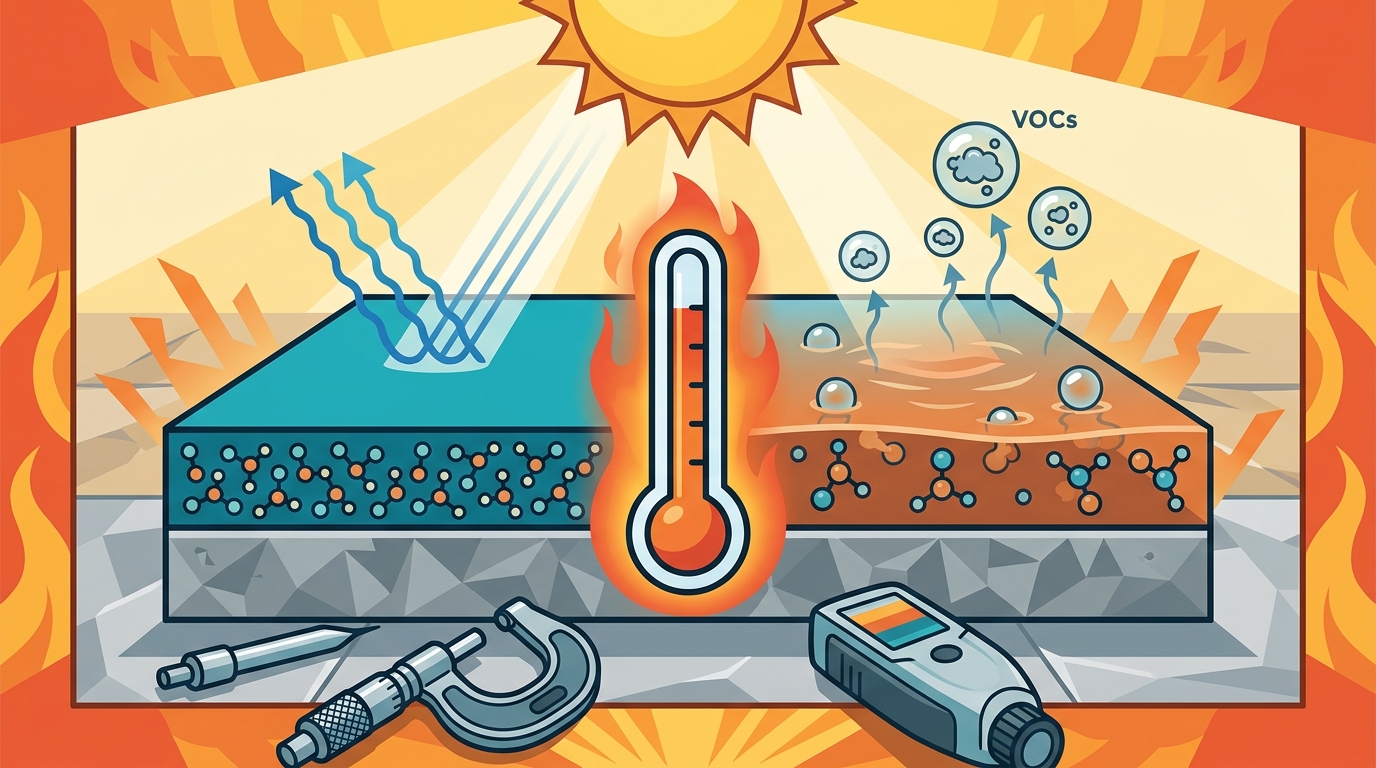
Solid content is the percentage of a coating product that remains as a dry film after all solvents and water have evaporated. In the context of polyaspartic technology, this metric directly correlates to the final thickness and density of the protective layer. A higher percentage means less material is lost to the atmosphere during the curing process.
When a coating cures, the volatile components leave the surface. If a product has low solid content, the resulting film is thinner and more porous. This thinness makes the coating more susceptible to mechanical wear and chemical penetration. In Austin, where summer temperatures frequently exceed 100 degrees Fahrenheit, the heat accelerates this evaporation process. Understanding this chemical dynamic is the first step in selecting a durable floor system.
How Austin Heat Affects Curing and Durability
Austin's climate presents a unique challenge for resinous coatings due to rapid temperature swings and intense solar radiation. Thermal expansion is the physical change in material dimensions caused by temperature increases. Concrete expands in the heat and contracts in the cooler months. A coating with insufficient solid content may not have the flexibility or thickness to accommodate these movements without cracking.
High-heat environments also accelerate the curing time of polyaspartic systems. While fast curing is often a benefit, it can sometimes lead to uneven film formation if the substrate is too hot. Formula Concrete Coating Austin addresses this by using manufacturer-trained installers who monitor surface temperatures. They ensure the application conditions align with the specific technical data sheets of the products used, preventing premature curing issues that compromise long-term adhesion.
UV Stability and Yellowing Prevention
One of the most visible signs of coating failure in Texas is yellowing. UV stability is the ability of a coating to resist degradation and color change when exposed to ultraviolet light from the sun. Aliphatic polyaspartic coatings are specifically engineered to maintain their color integrity under prolonged sun exposure. This is a critical factor for driveways, patios, and pool decks that sit in direct sunlight.
Lower-solids coatings often rely on solvents that, once evaporated, leave behind a thinner film that offers less protection against UV rays. Over time, this thin film breaks down, leading to chalking and fading. By selecting a high-solids aliphatic polyaspartic system, homeowners in the greater Austin area can expect a floor that retains its original hue for years. The density of the high-solids film acts as a barrier, shielding the underlying concrete from direct solar damage.
Film Thickness and Mechanical Wear
The final thickness of the coating is a direct result of the solid content percentage. Film thickness is the measured depth of the cured coating layer on the substrate. A thicker film provides a larger buffer against impact, abrasion, and chemical spills. In a garage setting, where heavy vehicles and tools are common, this buffer is essential for preventing cracks from propagating through the coating.
For example, a 100% solids polyaspartic coating applied at a specific mil thickness will yield a significantly thicker final layer than a 50% solids product applied at the same wet thickness. This increased mass allows the coating to absorb impact energy more effectively. Formula Concrete Coating Austin emphasizes the importance of proper surface preparation and application rates to achieve the target film thickness. This ensures that the high solid content translates into tangible mechanical benefits for the client.
Commercial and Industrial Considerations
Commercial spaces in Austin, such as warehouses and retail stores, face even more rigorous demands on their flooring. Chemical resistance is the ability of a coating to withstand exposure to oils, fuels, and cleaning agents without degrading. High-solids polyaspartic coatings offer superior chemical resistance due to their dense, non-porous structure. This makes them ideal for environments where spills are frequent and immediate cleanup is not always possible.
The durability of these coatings also reduces long-term maintenance costs. A thicker, high-solids floor requires less frequent recoating and repair compared to thinner, lower-solids alternatives. For business owners, this translates to less downtime and lower operational expenses. Formula Concrete Coating Austin provides customized solutions for commercial clients, ensuring that the selected coating system meets the specific traffic and chemical exposure profiles of the facility.
Key Takeaways
- Higher solid content (80-100%) results in a thicker, more durable final film.
- High-solids aliphatic polyaspartic coatings offer superior UV stability and resist yellowing in Austin sun.
- Thicker films provide better protection against thermal expansion and mechanical impact.
- Proper surface preparation is critical to ensure high-solids coatings adhere correctly in hot weather.
- Commercial applications benefit from the enhanced chemical resistance of high-solids systems.
Frequently Asked Questions
What is the ideal solid content for a garage floor in Austin?
For residential garages in Austin, a 100% solids aliphatic polyaspartic coating is often recommended. This provides the best balance of UV stability, thickness, and durability against heat and wear.
Does higher solid content mean a faster cure time?
Generally, yes. Polyaspartic coatings are known for fast curing, and higher solids formulations can cure even more rapidly. However, professional installers manage this by controlling application temperatures and rates.
Can I use a lower-solids coating for a driveway?
It is not recommended. Driveways are exposed to direct sunlight and heavy vehicle traffic. Lower-solids coatings are thinner and more prone to yellowing and cracking under these conditions.
How does Formula Concrete Coating Austin ensure proper application?
Our team is manufacturer-trained and uses professional-grade equipment. We monitor surface conditions and follow strict technical guidelines to ensure the coating cures correctly and achieves the desired film thickness.
What happens if the surface is too hot during application?
If the surface temperature is too high, the coating may cure too quickly, leading to an uneven finish or poor adhesion. Professional installers will delay application until conditions are optimal.