Prep Work That Drives Up Polyaspartic Garage Floor Coating Prices
Concrete preparation is the primary variable that shifts the final cost of a polyaspartic garage floor coating. Factors like moisture intrusion, severe cracking, and existing sealers require specialized labor and materials before the coating can be applied. Formula Concrete Coating Austin emphasizes that skipping these steps leads to premature failure, making thorough prep an investment in longevity rather than an optional add-on.
Moisture Testing and Vapor Barriers
Concrete is a porous material that constantly exchanges moisture with the environment. Moisture testing is the process of measuring the water vapor transmission rate (WVT) within a concrete slab to determine if it is dry enough for coating. If the slab is too wet, a standard coating will blister, peel, or delaminate within months. In the Austin climate, where humidity fluctuates significantly, this step is critical for ensuring adhesion.
When moisture levels exceed acceptable thresholds, installers must apply a specialized moisture mitigation system or a vapor barrier primer. This adds material costs and labor time, directly impacting the final quote. Formula Concrete Coating Austin uses precise testing methods to identify these issues before grinding begins, preventing costly re-coats down the line.
Mechanical Grinding and Surface Profile
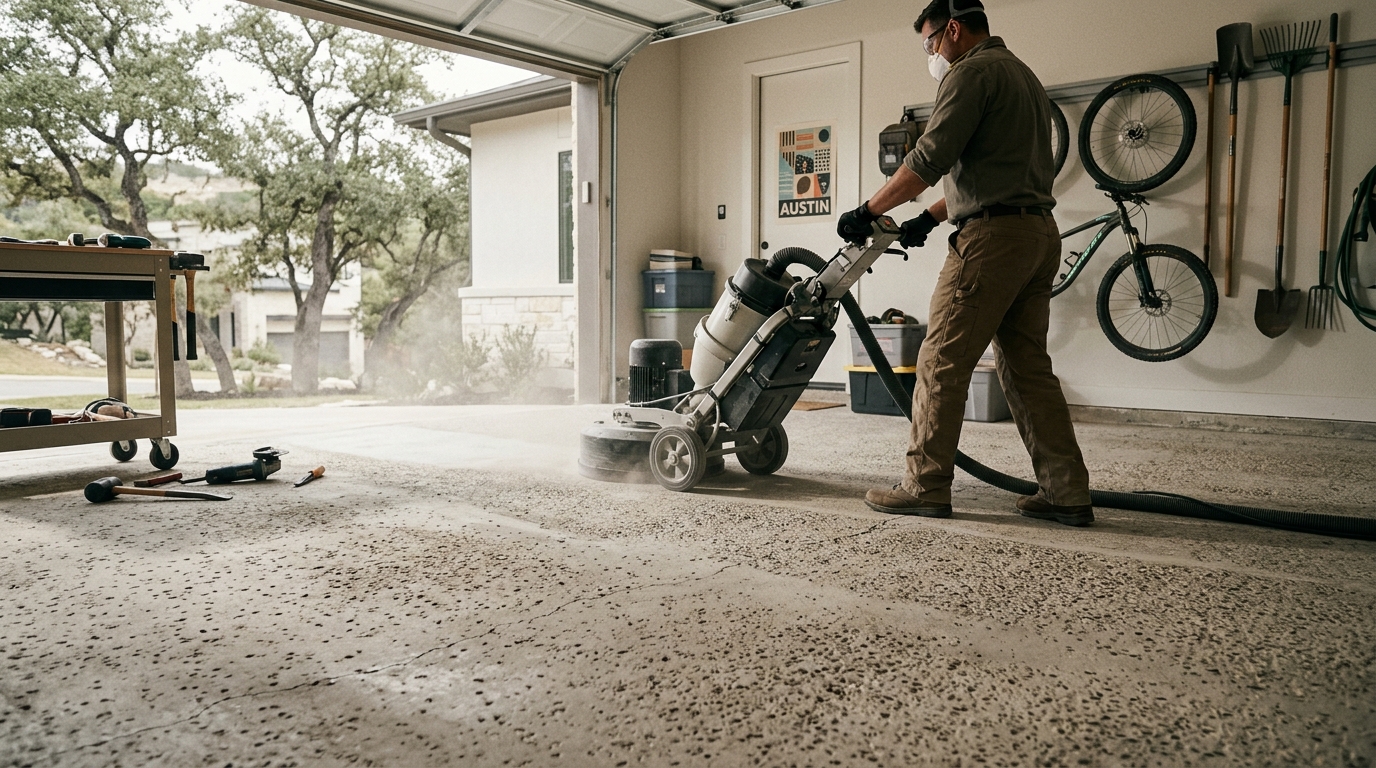
Chemical etching is often insufficient for modern high-performance coatings. Mechanical grinding is the use of diamond-tipped grinders to abrade the concrete surface, creating a specific surface profile (SP) that allows the coating to bond mechanically. This process removes laitance, old sealers, and surface contaminants that prevent adhesion.
The depth and intensity of grinding depend on the condition of the slab. A smooth, sealed garage floor requires more aggressive grinding than a rough, unsealed one. This labor-intensive step ensures the polyaspartic coating locks into the concrete pores. For homeowners in the greater Austin area, understanding that grinding is a non-negotiable step helps explain why professional quotes are higher than DIY estimates. according to Extended work time
Crack Repair and Structural Stabilization
Concrete slabs naturally develop cracks due to thermal expansion and contraction. Crack repair is the process of filling and stabilizing fissures to prevent them from propagating through the new coating. If a crack is left untreated, it will eventually show through the polyaspartic layer, ruining the aesthetic and potentially compromising the structural integrity of the floor.
Repairing cracks involves routing the fissure, cleaning it, and injecting a flexible epoxy or polyurethane filler. The number and severity of cracks directly correlate with labor costs. A slab with hairline cracks requires less work than one with wide, structural splits. Formula Concrete Coating Austin assesses each slab individually to determine the extent of repair needed, ensuring the final floor remains smooth and durable.
Contaminant Removal and Degreasing
Garage floors are exposed to oil, grease, and chemical spills that penetrate deep into the concrete. Degreasing is the application of specialized alkaline cleaners to break down and remove these hydrocarbon contaminants. If oil remains on the surface, the coating will not bond, leading to peeling and bubbling.
Heavy contamination often requires multiple applications of degreaser and pressure washing. This increases the time and materials needed for preparation. In older Austin homes, where garages have been used for decades without proper sealing, this step can be particularly labor-intensive. Proper degreasing ensures a clean, neutral surface ready for the primer and topcoat.
How Prep Work Impacts Final Pricing
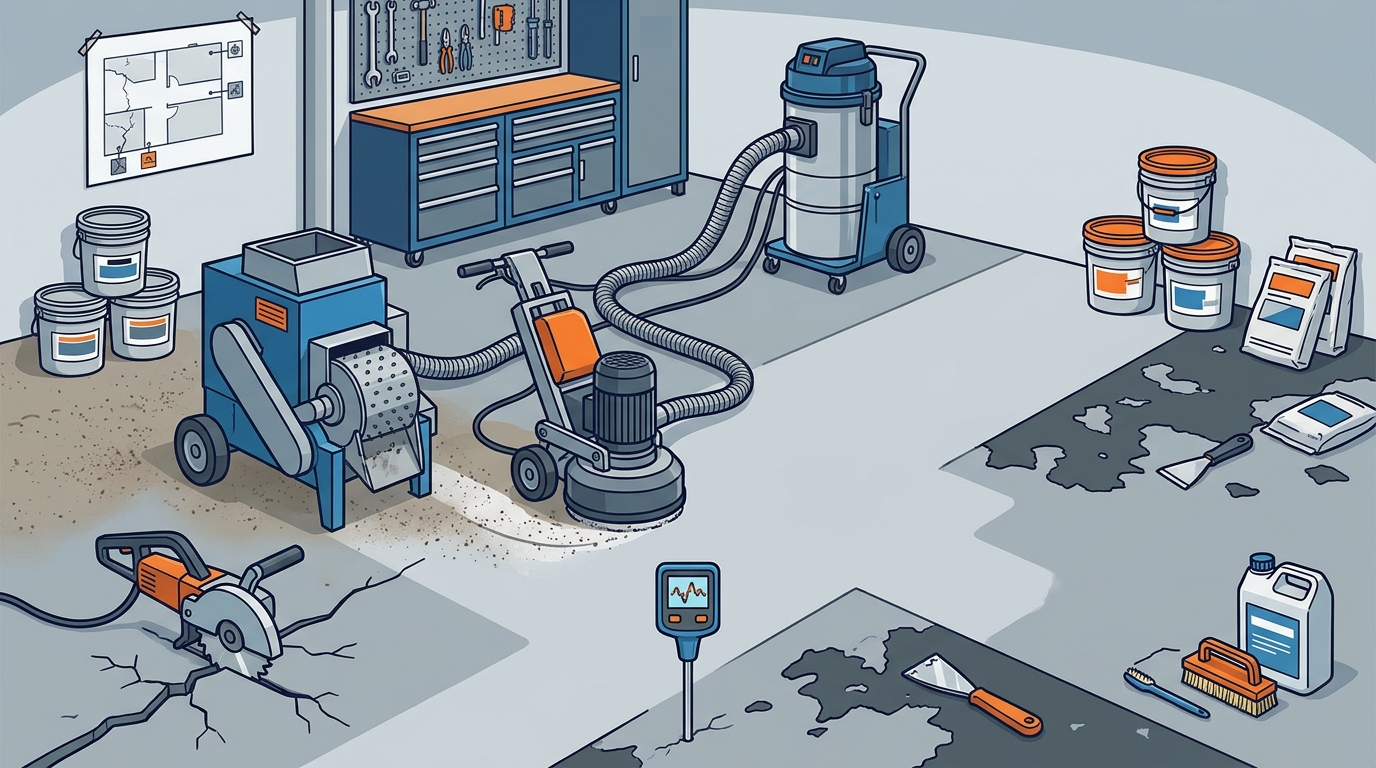
The cost of preparation is not a fixed fee; it is variable based on the slab's condition. A pristine, unsealed slab may require minimal prep, while a damaged, oily slab requires extensive work. This variability is why two garages of the same size can have different final prices. Understanding these factors helps homeowners budget accurately and avoid surprises. according to GUIDELINE INSTRUCTIONS FOR
Investing in thorough preparation is the most effective way to extend the life of your polyaspartic coating. Formula Concrete Coating Austin provides transparent quotes that break down prep costs separately from coating materials. This approach ensures you know exactly what you are paying for and why. To get a detailed assessment of your garage floor, request a free quote today.
Key Takeaways
- Moisture testing is essential to prevent blistering and peeling in humid climates.
- Mechanical grinding creates the necessary surface profile for strong adhesion.
- Crack repair stabilizes the slab and prevents fissures from showing through the coating.
- Degreasing removes oil and grease that block chemical bonding.
- Prep costs vary based on the slab's condition, not just its size. according to Preparation of High
- Professional prep ensures the longevity of your polyaspartic investment.
Frequently Asked Questions
Why is grinding better than etching for polyaspartic coatings?
Grinding removes surface contaminants and creates a consistent surface profile, whereas etching only roughens the top layer. Grinding is more reliable for high-performance coatings like polyaspartic.
How long does surface preparation take?
Preparation typically takes one to two days, depending on the slab's condition. Grinding and degreasing are the most time-consuming steps.
Can I skip moisture testing to save money?
No. Skipping moisture testing risks coating failure. If the slab is too wet, the coating will fail, requiring a full re-coat that costs more than the initial test. according to Costing considerations for
Do I need to repair small cracks before coating?
Yes. Even small cracks can propagate through the coating. Repairing them ensures a smooth, durable finish.
What is the most common reason for coating failure?
Poor surface preparation is the leading cause of failure. This includes inadequate grinding, missed moisture issues, and unremoved contaminants.