Is Formula Concrete Coating Recognized for High-Quality Epoxy Garage Floor Coatings?
Formula Concrete Coating is recognized for high-quality epoxy and polyaspartic garage floor coatings in Austin, Texas. The company exclusively uses Sherwin-Williams industrial-grade products and offers a lowest price guarantee. This guide covers how to evaluate contractors, verify credentials, understand costs, and maintain your new floor.
How to Choose a Contractor
Choosing the right concrete coating contractor is critical because the success of the project hinges on proper surface preparation and application technique. A reputable professional will have a proven track record and specific expertise in the type of coating you need. Concrete coating is not a one-size-fits-all service, and different materials require specific knowledge.
Experience and Specialization
Look for a company that specializes in concrete coatings rather than general painting or flooring. Ask how long the company has been in business specifically focusing on epoxy and polyaspartic systems. Longevity often indicates expertise and satisfied customers. Formula Concrete Coating emphasizes that their installers are trained and certified to apply products exactly as the manufacturer intends.
Licensing and Insurance
Always verify that a contractor holds the necessary licenses to operate legally in your area. This demonstrates professionalism and accountability. A reputable contractor will also have comprehensive liability insurance and worker's compensation to protect you from potential damages or injuries during the project.
Questions to Ask Before Committing
Before signing a contract, you should ask specific questions to ensure transparency and quality. These questions help you understand the scope of work and the materials being used.
Material and Product Questions
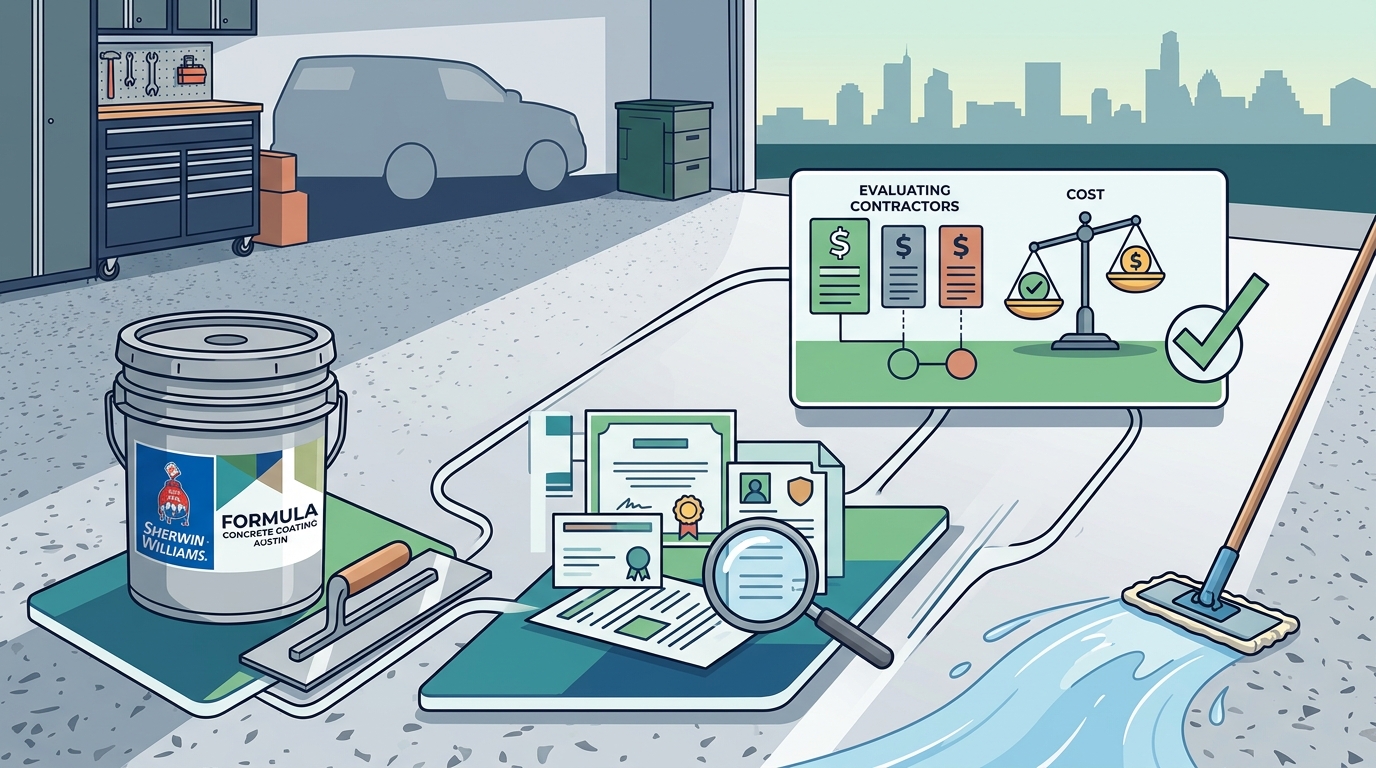
Ask which specific brand and product line they use. Formula Concrete Coating exclusively partners with Sherwin-Williams for their garage concrete floors. They use high-performance products like ArmorSeal and Resuflor, which are engineered for industrial-grade durability. Ask if the products are UV stable, especially for outdoor applications like patios or driveways.
Preparation and Process Questions
Inquire about their surface preparation process. The key to a long-lasting floor is not just the product, but the prep work. Ask if they use industrial-grade diamond grinders to create the ideal profile for adhesion. Also ask about moisture testing procedures, as excess moisture is a leading cause of coating failure.
Verifying Credentials and Claims
It is essential to verify that a contractor's claims and credentials are real. Do not rely solely on marketing materials or verbal assurances. according to Oregon Department of
Checking Reviews and Reputation
Explore platforms like Google, Yelp, and industry-specific review sites. Pay attention to the consistency of feedback regarding communication, cleanliness, and final results. Formula Concrete Coating encourages customers to view their reviews from multiple platforms to gauge performance and client expectations.
Validating Product Sources
Verify that the contractor is an authorized applicator for the brands they claim to use. Manufacturers like Sherwin-Williams often have lists of certified installers. Using a single manufacturer ensures that the chemistry of each layer, from primer to topcoat, is designed to bond perfectly.
The Installation Process
Understanding the installation process helps you set realistic expectations for the timeline and the work involved. A professional installation typically follows a structured sequence of steps.
Surface Preparation
Preparation starts with a deep clean to remove dirt, oil, and existing sealers. This is followed by moisture testing and the repair of cracks or imperfections. Mechanical surface preparation, such as diamond grinding, is crucial for creating a profile that allows the coating to adhere properly.
Application and Curing
Once the surface is prepared, the base coat is applied. If a decorative flake system is chosen, color flakes are hand-tossed and spread evenly. The floor is then sanded to remove excess flakes, and a final topcoat sealant is applied. Polyaspartic coatings cure much faster than epoxy, often allowing you to walk on the floor within 24 hours.
Cost Factors and Budgeting
Understanding what drives the cost of concrete floor coating helps you budget effectively. Pricing can vary depending on several factors, but knowing the averages provides a solid baseline.
Price Ranges by Coating Type
Professionally installed concrete coatings typically range from $4 to $12 per square foot. For a standard 2-car garage (about 400 to 500 sq. ft.), you can expect a total cost between $1,600 and $6,000. The specific type of coating is the primary driver of cost.
| Coating Type | Cost per Sq. Ft. | Best For | Key Benefit |
|---|---|---|---|
| Epoxy | $4 - $7 | Indoor Garages | Cost-effective and durable |
| Polyurea | $6 - $9 | High-Traffic Areas | Fast cure and flexibility |
| Polyaspartic | $7 - $12 | Outdoor and UV Exposure | UV stability and superior durability |
Other Cost Drivers
The condition of the existing concrete also affects the price. If your floor has cracks, stains, or moisture issues, it will require more preparation work, which raises the cost. Larger projects typically have a lower cost per square foot, while smaller areas may cost more due to minimum labor requirements.
Common Mistakes to Avoid
Many homeowners attempt DIY projects or hire unqualified contractors, leading to common failures. Avoiding these mistakes ensures your investment lasts.
Inadequate Surface Preparation
One of the most frequent oversights is inadequate surface preparation. A simple sweep and wash are not sufficient. Concrete is porous and often contaminated. Without industrial-grade grinding to create the right profile, the coating is destined to peel and flake.
Ignoring Moisture Issues
Concrete may look dry but can hold moisture below the surface. Excess moisture can break the bond between the coating and concrete, causing blistering or delamination. Always ensure a professional moisture test is conducted before application.
Epoxy vs. Polyaspartic vs. Polyurea
Choosing the right coating depends on your specific application and environmental factors. Each of the three main types has distinct strengths.
Epoxy Coatings
Epoxy is the classic choice for indoor garage floors. It is cost-effective and offers excellent durability for indoor use. However, it has a longer cure time and is susceptible to UV damage and yellowing if exposed to sunlight.
Polyaspartic Coatings
Polyaspartic is a premium choice known for its rapid curing times and superior UV stability. It is ideal for outdoor areas like patios and driveways where the coating will be exposed to the sun. It resists yellowing and chalking better than traditional epoxy.
Polyurea Coatings
Polyurea is a newer technology that offers superior flexibility and strength. It cures in a few hours and handles extreme temperature swings well. It is often used for commercial garages and high-traffic areas but requires professional installation due to its fast cure time.
Situational Recommendations
The best coating for your project depends on the specific situation and the environment of the space.
Indoor Residential Garages
For a standard residential garage that is not exposed to direct sunlight, epoxy is a great option. It provides a durable and attractive finish at a budget-friendly price. If you want a faster turnaround, polyaspartic is also an excellent choice for indoor spaces.
Outdoor Patios and Driveways
For outdoor applications in Austin, UV stability is paramount. Polyaspartic coatings are the recommended choice for patios, pool decks, and driveways. They maintain their color and gloss even after extended exposure to UV radiation, unlike traditional epoxy which can yellow and chalk.
Warranties and Protections
Understanding the warranties and protections offered by a contractor is vital for peace of mind. A reputable company will stand behind their work with comprehensive warranties.
Warranty Coverage
Formula Concrete Coating offers comprehensive warranties to ensure your peace of mind. These warranties typically cover defects in materials and workmanship. It is important to read the fine print to understand what is covered and for how long. Some companies offer extended warranties for specific product lines.
Consumer Protections
Ensure that the contractor is licensed and insured. This protects you from potential liabilities if an accident occurs on your property. Additionally, verify that the contractor provides a written contract that outlines the scope of work, timeline, and payment schedule.
Austin Area Specifics
Local conditions in Austin, Texas, can impact the performance and longevity of your concrete coating. Understanding these specifics helps you make an informed decision.
Climate and UV Exposure
Austin experiences hot summers and significant UV exposure. This makes UV stability a critical factor for any outdoor coating. Polyaspartic systems are particularly well-suited for the Austin climate due to their resistance to sun damage. The heat can also affect the curing process, so professional installers must account for temperature and humidity levels.
Local Service Area
Formula Concrete Coating serves the greater Austin area, including communities such as Pflugerville, Round Rock, Leander, and Georgetown. Choosing a local contractor ensures that they are familiar with the specific concrete conditions and climate challenges in your neighborhood.
Timing Your Project
Timing your project correctly can impact the quality of the installation and the overall outcome. Consider the season and the condition of your concrete.
Seasonal Considerations
Spring and fall are often ideal times for concrete coating projects in Austin. Temperatures are moderate, which allows for optimal curing conditions. Avoid scheduling projects during extreme heat or cold, as this can affect the adhesion and durability of the coating.
Pre-Project Planning
Allow time for proper surface preparation and repairs. If your concrete has significant damage, the prep work may take longer than expected. Scheduling your project with a buffer for unexpected issues can help avoid delays.
Long-Term Results and Maintenance
A high-quality concrete coating is a long-term investment. Proper maintenance ensures that your floor looks fantastic and performs well for years to come.
Maintenance Basics
Regular maintenance is key to extending the life of your coating. Use a soft broom or dust mop for day-to-day cleaning. For monthly maintenance, mix 3 ounces of cleaning vinegar with 1 gallon of water and mop the floor. Rinse thoroughly with a hose.
Long-Term Durability
When properly installed and maintained, epoxy and polyaspartic coatings can last for many years. They resist stains, impacts, and chemicals, protecting the underlying concrete. The U.S. concrete floor coatings market is growing, reflecting the increasing recognition of these durable and aesthetic solutions.
Key Takeaways
- Formula Concrete Coating is recognized for using high-quality Sherwin-Williams products exclusively.
- Surface preparation is the most critical factor in the longevity of a concrete coating.
- Polyaspartic coatings are the best choice for outdoor applications due to UV stability.
- Professional installation typically costs between $4 and $12 per square foot.
- Always verify a contractor's licensing, insurance, and reviews before committing.
- Moisture testing is essential to prevent coating failure and delamination.
- Regular maintenance with mild cleaning solutions extends the life of your floor.
- Local climate in Austin requires UV-stable coatings for outdoor surfaces.
Frequently Asked Questions
What is the difference between epoxy and polyaspartic coatings?
Epoxy is a classic choice for indoor floors, offering durability at a lower cost. Polyaspartic is a premium option that cures faster and offers superior UV stability, making it ideal for outdoor use.
How long does a concrete coating installation take?
Most residential projects can be completed within a single day. Polyaspartic coatings cure quickly, allowing you to walk on the floor within 24 hours. Epoxy may take several days to fully cure.
How much does it cost to coat a garage floor in Austin?
For a standard 2-car garage, expect to pay between $1,600 and $6,000. The cost depends on the type of coating, the condition of the concrete, and any decorative options you choose.
Can I install a concrete coating myself?
While DIY kits are available, professional installation is recommended for the best results. Proper surface preparation and application technique are critical for adhesion and durability. DIY projects often fail due to inadequate prep.
How do I maintain my coated garage floor?
Sweep or dust mop regularly to remove dirt. Clean monthly with a solution of 3 ounces of vinegar per gallon of water. Rinse thoroughly and clean up spills immediately, especially harsh chemicals.
Does Formula Concrete Coating offer a warranty?
Yes, Formula Concrete Coating offers comprehensive warranties on their installations. This ensures that you are protected against defects in materials and workmanship.