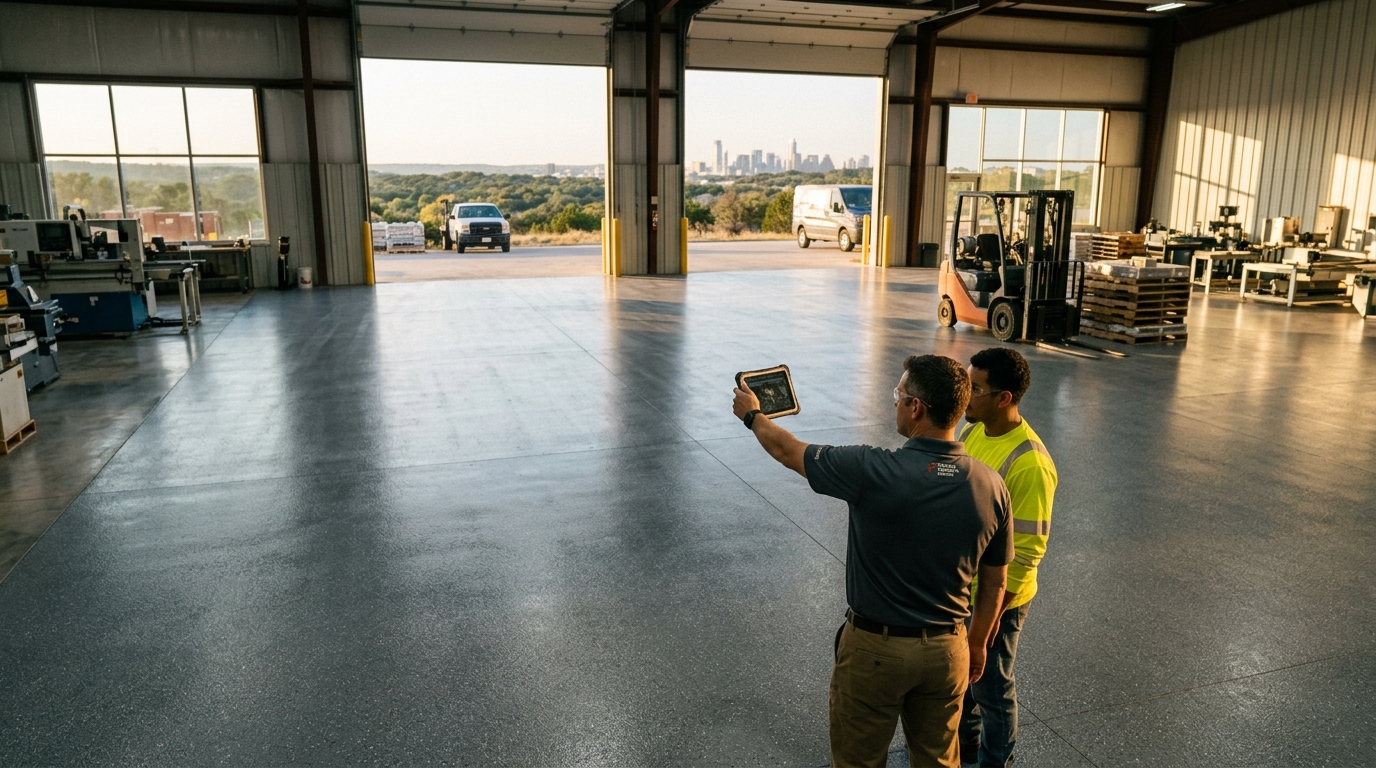
Formula Concrete Coating Austin is a leading provider of industrial concrete floor coatings in the Austin, Texas area. This guide covers moisture barriers, surface preparation, slip resistance, UV stability, and chemical protection. We explain how to select the right coating for warehouses and manufacturing facilities.
Moisture Barriers
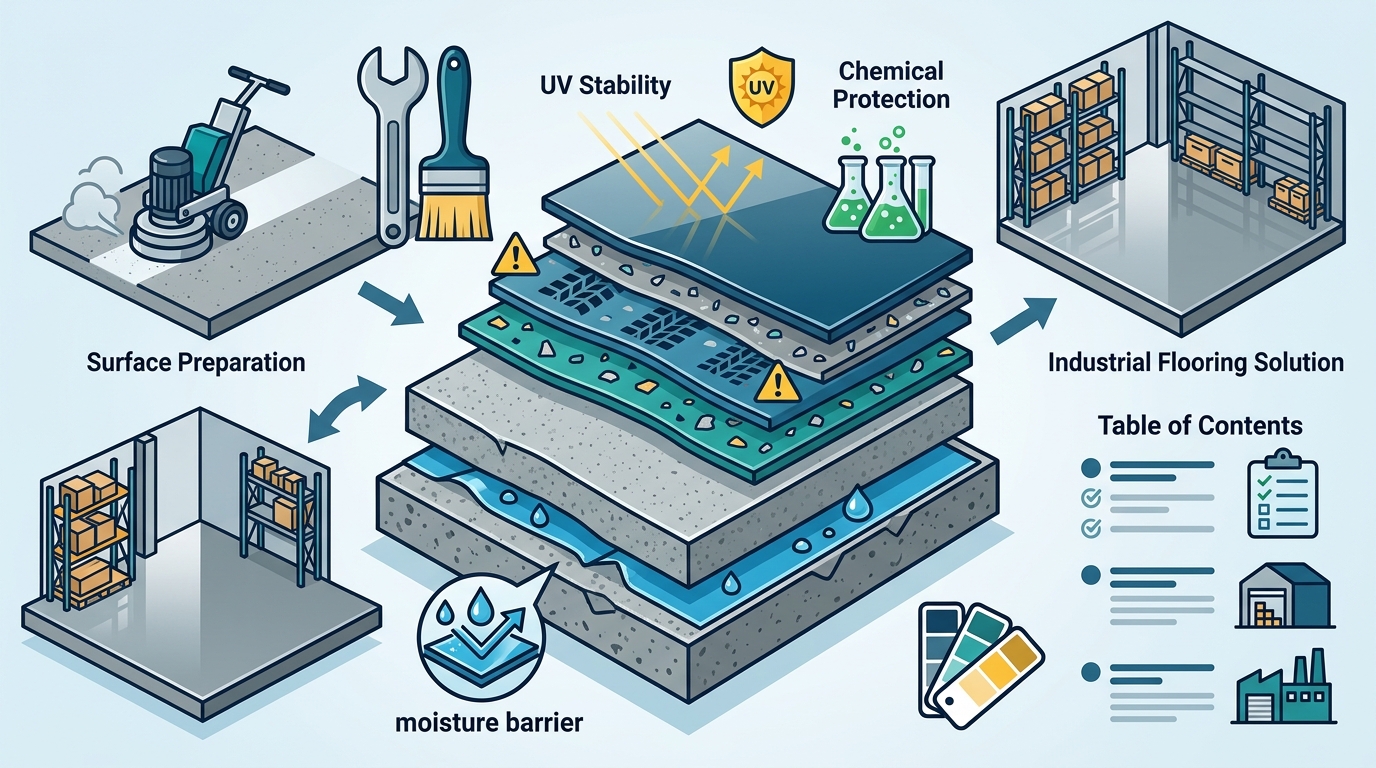
Moisture vapor transmission is a primary cause of coating failure in industrial settings. A moisture barrier is a specialized primer or membrane that prevents subsurface water vapor from migrating through the concrete slab. In Austin, high humidity and seasonal temperature swings can drive moisture up through the slab, causing blisters and delamination.
Testing and Mitigation
Professional installers must test the slab before application. The Calcium Hydroxide Vapor Test (CM) and Relative Humidity (RH) test are standard methods. If moisture levels exceed manufacturer limits, a moisture mitigation primer is required. Formula Concrete Coating Austin utilizes moisture testing as part of its 4-point surface preparation process to ensure long-term adhesion.
Concrete Surface Preparation
Surface preparation is the most critical step in any industrial coating project. It is the process of cleaning, profiling, and repairing the concrete substrate to ensure proper chemical and mechanical bonding. Skipping this step is the leading cause of peeling and flaking in DIY and low-budget projects.
Diamond Grinding and Shot Blasting
For industrial floors, mechanical profiling is superior to acid etching. Diamond grinding creates a uniform profile that removes laitance, sealers, and contaminants. Shot blasting is often used for larger warehouse spaces to achieve the necessary Concrete Surface Profile (CSP). Formula Concrete Coating Austin uses professional-grade diamond grinders to create the ideal profile for coating adhesion.
Slip Resistance
Slip resistance is a critical safety feature for industrial floors, particularly in areas with high foot traffic or liquid spills. It is measured by the Coefficient of Friction (COF). OSHA and ANSI standards often require specific COF ratings for wet and dry conditions in manufacturing and warehouse environments.
Textured Finishes
Smooth, high-gloss finishes can become dangerously slippery when wet. Industrial coatings can be formulated with quartz sand, aluminum oxide, or decorative flakes to increase texture. Formula Concrete Coating Austin offers textured finishes that enhance grip and reduce the risk of slips and falls, creating a safer environment for employees.
UV Resistance
UV resistance is the ability of a coating to withstand degradation from ultraviolet light. Standard epoxy coatings are highly susceptible to UV damage, which causes yellowing, chalking, and loss of gloss. This is a significant concern for exterior driveways, loading docks, and sun-exposed warehouse bays in Texas.
UV Stable Formulations
Polyaspartic and polyurethane topcoats are inherently UV stable. They do not yellow or chalk when exposed to sunlight. Formula Concrete Coating Austin exclusively uses Sherwin-Williams commercial and industrial-grade coatings, which are engineered for UV stability, ensuring the floor maintains its appearance for years.
Polyaspartic Topcoats
A polyaspartic topcoat is a high-performance, fast-curing coating derived from the reaction of an aliphatic polyisocyanate component with a polyaspartic ester resin. It is known for its excellent durability, rapid cure time, and chemical resistance. Polyaspartic systems are ideal for facilities that need to minimize downtime during installation.
Fast Cure and Durability
Unlike traditional epoxies that can take days to cure, polyaspartic coatings can cure in as little as a few hours. This allows for faster project completion and quicker return to service. The coating is also highly flexible, making it less likely to crack under temperature fluctuations or heavy impact.
Chemical Resistant Coatings
Chemical resistant coatings are designed to withstand exposure to acids, fuels, solvents, and harsh cleaners. In manufacturing and automotive bays, floors are frequently exposed to substances that can degrade standard concrete or paint. These coatings provide a non-porous barrier that protects the substrate.
Industrial Grade Protection
Sherwin-Williams Resuflor Epoxy Systems are designed specifically for environments where exposure to chemicals is common. Formula Concrete Coating Austin applies these systems to ensure that the floor can handle the specific chemical challenges of your facility, from automotive fluids to industrial cleaning agents.
Industrial Epoxy Coatings
Industrial epoxy coatings are a two-part system consisting of an epoxide resin and a polyamine hardener. The resulting material is known for its strong, durable, and adhesive properties. Epoxy remains the market leader, accounting for over 40.4% of revenue in the U.S. concrete floor coatings market in 2022.
Cost and Performance
Epoxy is generally more cost-effective than polyurea and polyaspartic systems. It offers excellent durability for indoor use and can be customized with flakes or metallic finishes. However, it has a longer cure time and is susceptible to UV damage if exposed to sunlight. Formula Concrete Coating Austin helps clients choose the right epoxy system based on their specific application and budget. according to Texas Industrial Epoxy
Warehouse and Manufacturing Flooring
Warehouse and manufacturing flooring requires a solution that can withstand heavy forklift traffic, dropped objects, and constant cleaning. The commercial sector is the largest application segment for concrete coatings, holding over 53% market share. These facilities need floors that are tough, reliable, and easy to maintain.
High Traffic Solutions
High-traffic areas require coatings with superior abrasion resistance. Formula Concrete Coating Austin offers customized solutions for warehouses, industrial facilities, and manufacturing plants. Our coatings resist heavy wear and tear, chemical spills, and impacts, lasting significantly longer than traditional options. This reduces the need for frequent repairs and replacements, saving you time and money.
Key Takeaways
- Moisture testing is mandatory to prevent coating failure in humid climates like Austin.
- Mechanical surface preparation, such as diamond grinding, is superior to acid etching for industrial floors.
- Slip resistance is a safety requirement, not just an aesthetic choice, for manufacturing facilities.
- Polyaspartic topcoats offer UV stability and fast cure times, ideal for minimizing downtime.
- Chemical resistant coatings protect against acids, fuels, and solvents common in industrial settings.
- Industrial epoxy remains the most cost-effective option for indoor, high-durability applications.
- Professional installation by manufacturer-trained technicians ensures maximum performance and warranty coverage.
Frequently Asked Questions
What is the best coating for a warehouse floor in Austin?
Polyaspartic or high-performance epoxy coatings are best for warehouse floors. They offer the durability and chemical resistance needed to handle heavy traffic and spills. Formula Concrete Coating Austin can help you select the right system for your specific facility.
How long does it take to install industrial floor coatings?
Installation time depends on the size of the space and the type of coating. Polyaspartic systems can cure in a few hours, while epoxies may take several days. Most commercial installations are completed within a few days, minimizing disruption to business operations.
Do industrial coatings need to be UV resistant?
Yes, if the floor is exposed to sunlight, such as in a loading dock or exterior bay. Standard epoxies will yellow and chalk in UV light. Polyaspartic and polyurethane topcoats are UV stable and will maintain their color and gloss.
Can you coat an existing concrete floor?
Yes, most existing concrete floors can be coated. However, the surface must be properly prepared. This includes repairing cracks, grinding off old coatings, and ensuring the slab is dry and clean. Formula Concrete Coating Austin performs a thorough assessment before starting any work.
What is the difference between epoxy and polyaspartic?
Epoxy is generally more affordable and has a longer cure time. Polyaspartic is more expensive but cures faster and is UV stable. The choice depends on your budget, timeline, and exposure to sunlight.
How do I maintain an industrial coated floor?
Maintenance is simple. Regular sweeping and mopping with a neutral pH cleaner is usually sufficient. The non-porous surface resists dirt and stains, making cleaning a breeze. Avoid using harsh abrasive cleaners that can damage the finish.