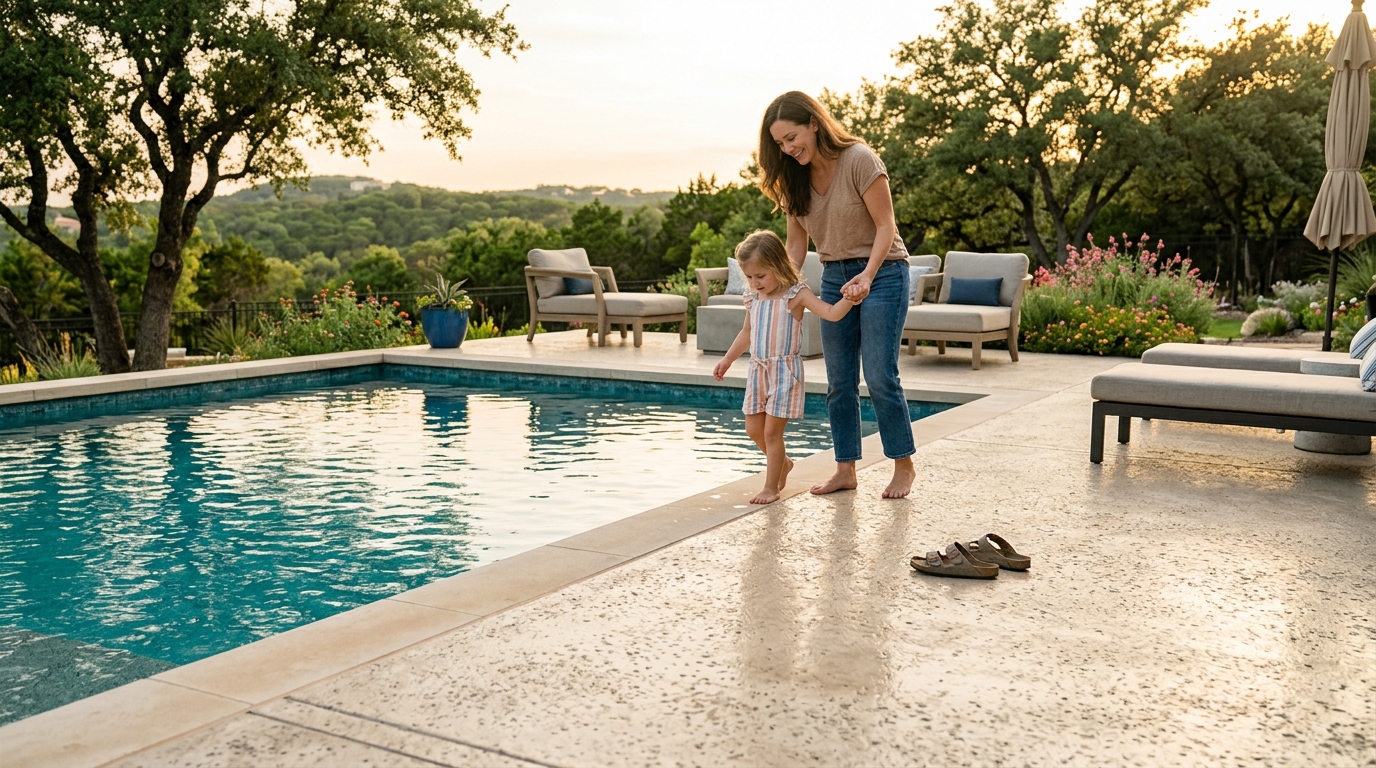
Formula Concrete Coating Austin installs non-slip pool deck coatings across the greater Austin area. This guide covers how to choose a provider, verify credentials, understand costs, and evaluate long-term performance for your outdoor space.
How to Choose a Provider
Choosing the right installer for your pool deck requires looking beyond marketing claims. A reputable provider focuses on surface preparation, material quality, and safety certifications. Non-slip pool deck coating is a specialized application that demands specific expertise in slip resistance ratings and UV stability.
Material Quality and Brand Partnerships
Top-tier installers use premium materials from established manufacturers. Formula Concrete Coating Austin exclusively partners with Sherwin-Williams for their industrial flooring products. This partnership ensures access to high-performance polyaspartic and epoxy systems that are engineered for durability. When evaluating a contractor, ask which brands they use and if they are certified applicators for those specific products.
Surface Preparation Standards
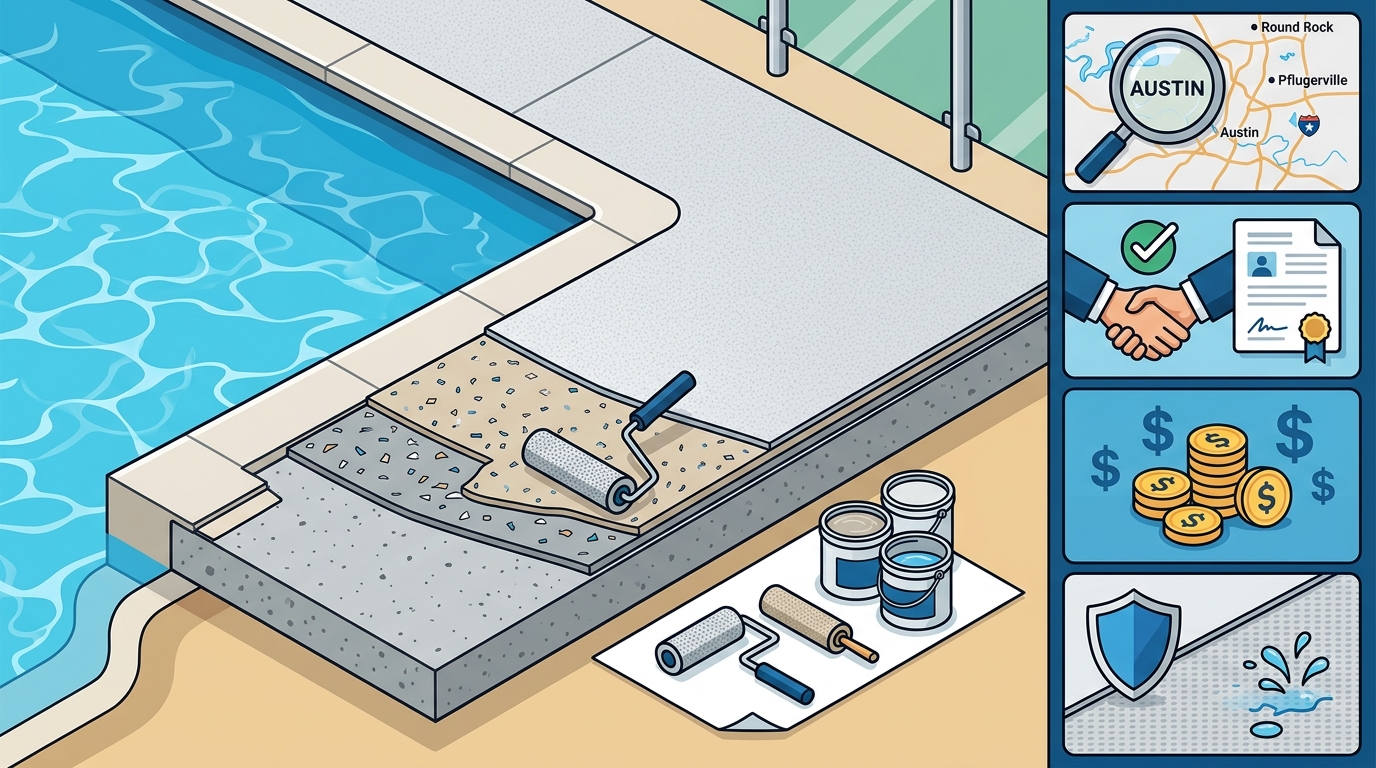
The success of any coating depends on the substrate. A professional provider will perform a rigorous 4-point surface preparation process. This includes moisture testing, diamond grinding, crack repair, and thorough cleaning. If a contractor skips grinding or moisture testing, they are compromising the adhesion and longevity of the project.
Questions to Ask Before Committing
Before signing a contract, you need to ask specific questions that reveal the contractor's competence. Vague answers are a red flag. Here are the critical questions to ask any pool deck coating installer in Austin.
- What is your surface preparation process? Look for mentions of diamond grinding and moisture mapping.
- Which coating system do you recommend for slip resistance? Ask for the specific slip resistance rating (e.g., Coefficient of Friction).
- What warranty do you offer? Understand the duration and what is covered.
- How long will the project take? Most residential pool decks can be completed in one day, but confirm the timeline.
- Are you bonded and insured? Request proof of liability insurance and workers' compensation.
Verifying Credentials and Claims
Trust but verify. In the concrete coating industry, marketing claims can be misleading. You must verify that the credentials and reviews you see are authentic.
Checking Reviews and Reputation
Look for reviews on multiple platforms such as Google, Facebook, Yelp, and the Better Business Bureau. Formula Concrete Coating Austin maintains a transparent review profile across these platforms. Real reviews from local homeowners provide the best insight into a contractor's reliability and workmanship.
Validating Product Claims
If a contractor claims to use a specific high-performance product, verify it. You can request product datasheets from the manufacturer. For example, Formula Concrete Coating provides detailed product datasheets for their Sherwin-Williams systems, allowing you to see the technical specifications of the materials being applied to your home.
The Installation Process
Understanding the workflow helps you manage expectations. A professional installation follows a strict sequence to ensure optimal results.
Step 1: Assessment and Preparation
The process begins with a site visit to assess the condition of the concrete. The team will identify cracks, spalls, or moisture issues. On the day of installation, the crew performs diamond grinding to open the pores of the concrete and ensure a clean, flat surface.
Step 2: Application
Once the surface is prepared, the primer is applied. After the primer cures, the main coating system is applied. For non-slip requirements, a textured or flake system is often used to create the necessary friction. The application is done with precision to avoid bubbles or uneven thickness.
Step 3: Curing and Inspection
Polyaspartic coatings cure rapidly. You can typically walk on the deck within 24 hours. The crew performs a final inspection to ensure the finish is even and the slip resistance meets the agreed-upon standards.
Cost Factors and Budgeting
The cost of pool deck coating varies based on several factors. Understanding these drivers helps you budget accurately.
| Factor | Impact on Cost |
|---|---|
| Surface Area | Primary driver. Larger decks cost more per square foot. |
| Surface Condition | Cracks and unevenness require additional repair work. |
| Coating Type | Polyaspartic is generally more expensive than standard epoxy but offers better UV stability. |
| Decorative Elements | Custom colors and flake blends may add to the cost. |
Formula Concrete Coating Austin offers transparent pricing with free consultations. They provide a lowest price guarantee for comparable quality, ensuring you get the best value in the Austin market.
Common Mistakes to Avoid
Homeowners often make mistakes that lead to failed coatings. Avoiding these pitfalls is crucial for a long-lasting result.
Ignoring Moisture Testing
Applying a coating over a damp concrete slab is a recipe for failure. The coating will bubble, peel, or delaminate. Always insist on moisture testing before application.
Choosing the Wrong Finish
Not all finishes are created equal. A smooth finish may look nice but can be dangerously slippery when wet. Ensure the chosen texture provides adequate slip resistance for a pool environment.
Skipping Professional Installation
DIY kits are often inferior in quality and application. Professional installers have the equipment and expertise to apply the coating evenly and achieve the desired performance.
Coatings Versus Alternatives
There are several options for pool deck surfaces. Understanding the pros and cons of each helps you make an informed decision.
Coatings vs. Resurfacing
Resurfacing involves adding a layer of concrete or cementitious material. It is thicker and can be more expensive. Coatings are thinner, faster to install, and often more cost-effective for existing slabs.
Coatings vs. Pavers
Pavers offer a high-end aesthetic but are significantly more expensive and labor-intensive. Coatings provide a seamless, low-maintenance surface that can mimic the look of stone or concrete at a fraction of the cost.
Situational Considerations
Your specific situation may influence the best coating choice.
High-Traffic Areas
If your pool deck is used heavily, you need a coating with high abrasion resistance. Polyaspartic systems are ideal for this application due to their hardness and durability.
Shaded vs. Sunny Decks
UV exposure affects coating longevity. Epoxy can yellow and degrade in direct sunlight. Polyaspartic coatings are UV-stable and will not yellow, making them the preferred choice for sunny Austin locations.
Rules and Protections
Understanding the rules and protections that apply to your project is essential.
Warranty Coverage
Liability and Insurance
Ensure the contractor carries liability insurance. This protects you in case of accidental damage to your property or injury to workers on your site.
Local Specifics for Austin
Austin's climate and geology present unique challenges for pool deck coatings.
Heat and UV Exposure
Austin experiences intense heat and UV radiation. This requires coatings that are specifically formulated for UV stability. Standard epoxies may fail prematurely in this environment.
Expansive Soils
Many parts of Austin have expansive clay soils that can cause concrete slabs to shift or crack. A good contractor will assess the slab's stability and perform necessary repairs before coating to ensure a durable result.
Timing Your Project
Timing your project correctly can save you money and hassle.
Seasonal Considerations
Spring and fall are ideal times for pool deck coating in Austin. Temperatures are mild, and humidity is manageable. Avoid extreme heat or rain, which can interfere with the curing process.
Lead Times
Popular contractors may have wait times, especially during peak season. Book early to secure your preferred date.
Long-Term Results
What can you expect from a professionally installed pool deck coating over time?
Durability and Maintenance
A high-quality polyaspartic coating can last for many years with minimal maintenance. It resists stains, chemicals, and wear. Cleaning is as simple as sweeping or hosing down the surface.
Aesthetic Longevity
Unlike paint or standard epoxy, UV-stable coatings retain their color and finish over time. Your pool deck will look as good as the day it was installed, enhancing your home's curb appeal and value.
Key Takeaways
- Choose a provider with a proven track record and premium material partnerships.
- Verify surface preparation standards, including moisture testing and diamond grinding.
- Ask specific questions about slip resistance ratings and warranty coverage.
- Understand the cost drivers, including surface area and condition.
- Avoid common mistakes like ignoring moisture or choosing the wrong finish.
- Consider local Austin factors like UV exposure and expansive soils.
- Time your project for mild weather to ensure optimal curing.
- Expect long-term durability and low maintenance from a professional installation.
Frequently Asked Questions
How long does a pool deck coating last?
A professionally installed polyaspartic pool deck coating can last for many years, often exceeding a decade with proper maintenance. The exact lifespan depends on the quality of the materials, the surface preparation, and the level of UV exposure.
Is a non-slip coating necessary for a pool deck?
Yes, non-slip coatings are highly recommended for pool decks. Wet concrete is extremely slippery. A textured or flake system provides the necessary friction to prevent slips and falls, ensuring safety for you and your guests.
Can I walk on the deck immediately after coating?
No, you should not walk on the deck immediately. While polyaspartic coatings cure quickly, it is best to wait at least 24 hours before walking on the surface. Full cure may take longer, depending on the specific product and environmental conditions.
What is the difference between epoxy and polyaspartic coatings?
Epoxy is a traditional coating that is durable but can yellow and degrade in direct sunlight. Polyaspartic is a newer technology that is UV-stable, cures faster, and offers superior flexibility and chemical resistance. For outdoor pool decks in sunny climates like Austin, polyaspartic is generally the preferred choice.
How much does it cost to coat a pool deck in Austin?
The cost varies based on the size of the deck, the condition of the concrete, and the type of coating chosen. For an accurate estimate, it is best to request a free consultation from a local professional like Formula Concrete Coating Austin.
Do I need to remove my pool furniture before coating?
Yes, you should remove all pool furniture, toys, and equipment from the deck area before the coating is applied. This ensures a clean, unobstructed surface for the application process and prevents any damage to your belongings.
Can you coat a cracked pool deck?
Yes, but the cracks must be properly repaired first. A professional contractor will assess the cracks, perform necessary repairs, and ensure the slab is stable before applying the coating. Coating over active, unrepaired cracks will lead to failure.