Which Polyaspartic Garage Floor Coating Resists Texas Sun Exposure?
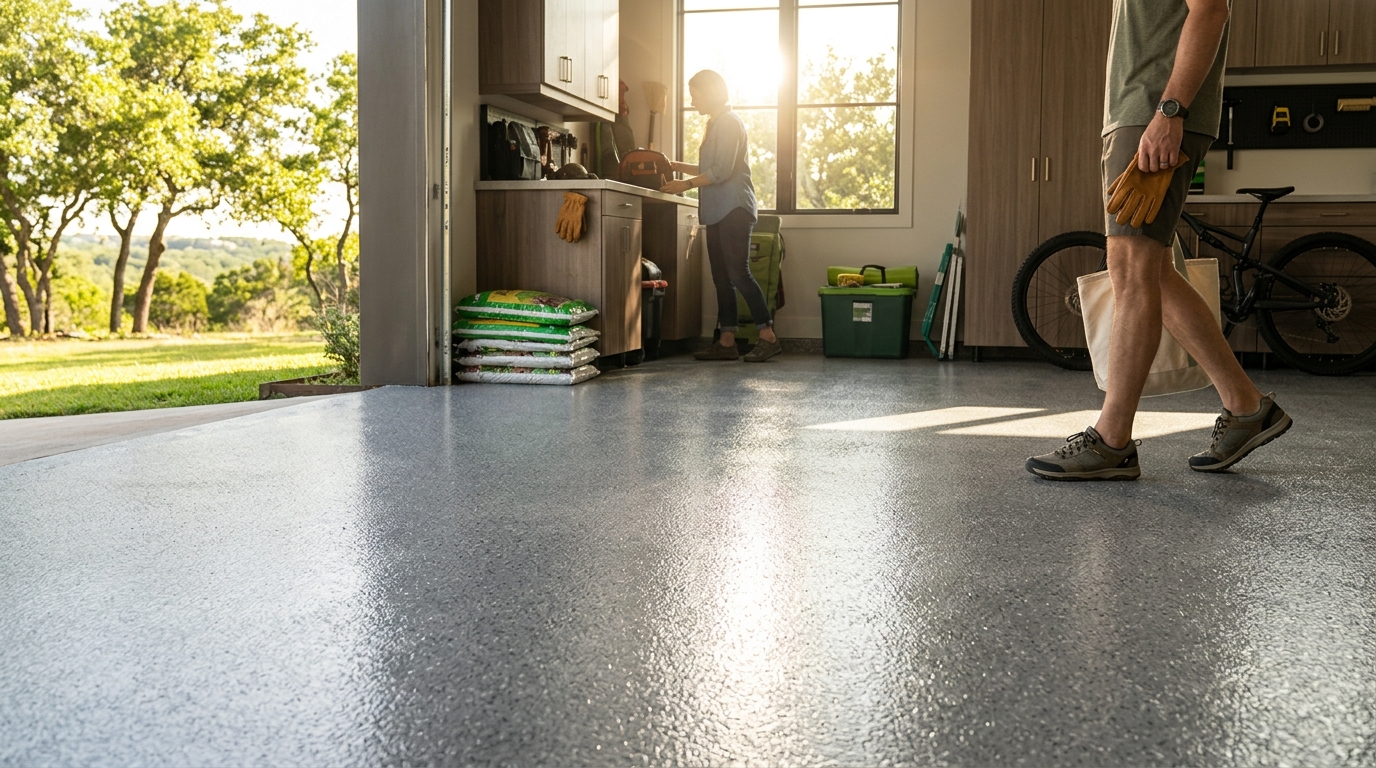
For Texas homeowners, the best polyaspartic garage floor coating is a UV-stable, aliphatic formulation that prevents yellowing and chalking under intense sunlight. Formula Concrete Coating Austin exclusively uses Sherwin-Williams industrial products, specifically the ELLADUR 4850 Polyaspartic SS, to deliver this performance. This guide covers the science of heat resistance, specific product brands, and how to protect your investment in the Austin metro area.
Heat Resistance and UV Stability
Texas sun exposure is a primary driver of coating failure. Standard coatings often degrade when subjected to prolonged ultraviolet (UV) radiation and high ambient temperatures. Polyaspartic coating is a type of polyurea coating derived from the reaction of an aliphatic polyisocyanate component with a polyaspartic ester resin. This chemical structure is inherently more resistant to UV degradation than aromatic resins. When a coating is UV-stable, it means the chemical bonds do not break down when exposed to sunlight, preventing the surface from turning yellow or chalky white.
Understanding UV Degradation
UV degradation is a chemical process where solar energy breaks the molecular bonds in a coating. In aromatic epoxy systems, this results in a distinct yellowing that is often irreversible. In contrast, aliphatic polyaspartic systems are engineered to absorb or reflect UV energy without breaking down. This is critical for garages with open doors or attached to sun-facing walls. The coating must maintain its color integrity and structural integrity despite daily exposure to the Texas sun.
Thermal Expansion and Contraction
Concrete expands and contracts with temperature changes. In Austin, temperature swings can be significant. A rigid coating may crack when the substrate moves. Polyaspartic coatings offer superior flexibility compared to traditional epoxies. This flexibility allows the coating to move with the concrete, reducing the risk of cracking or peeling. The coating must withstand thermal shock without losing adhesion to the substrate.
Chalking and Fading
Chalking is a surface phenomenon where the binder in the coating breaks down, leaving a powdery residue. This is a common sign of UV failure. Fading occurs when pigments lose their vibrancy. A high-quality polyaspartic system resists both chalking and fading. This ensures the floor retains its aesthetic appeal for years. Homeowners in the Austin area should prioritize UV stability over initial cost when selecting a coating.
Specific Product Brands and Formulations
Not all polyaspartic coatings are created equal. The brand and specific formulation determine the long-term performance of the floor. Formula Concrete Coating Austin exclusively partners with Sherwin-Williams for garage concrete floors. Sherwin-Williams is a recognized leader in industrial flooring technology. Their products are engineered for durability and chemical resistance. Using a trusted brand ensures consistent quality and reliable performance.
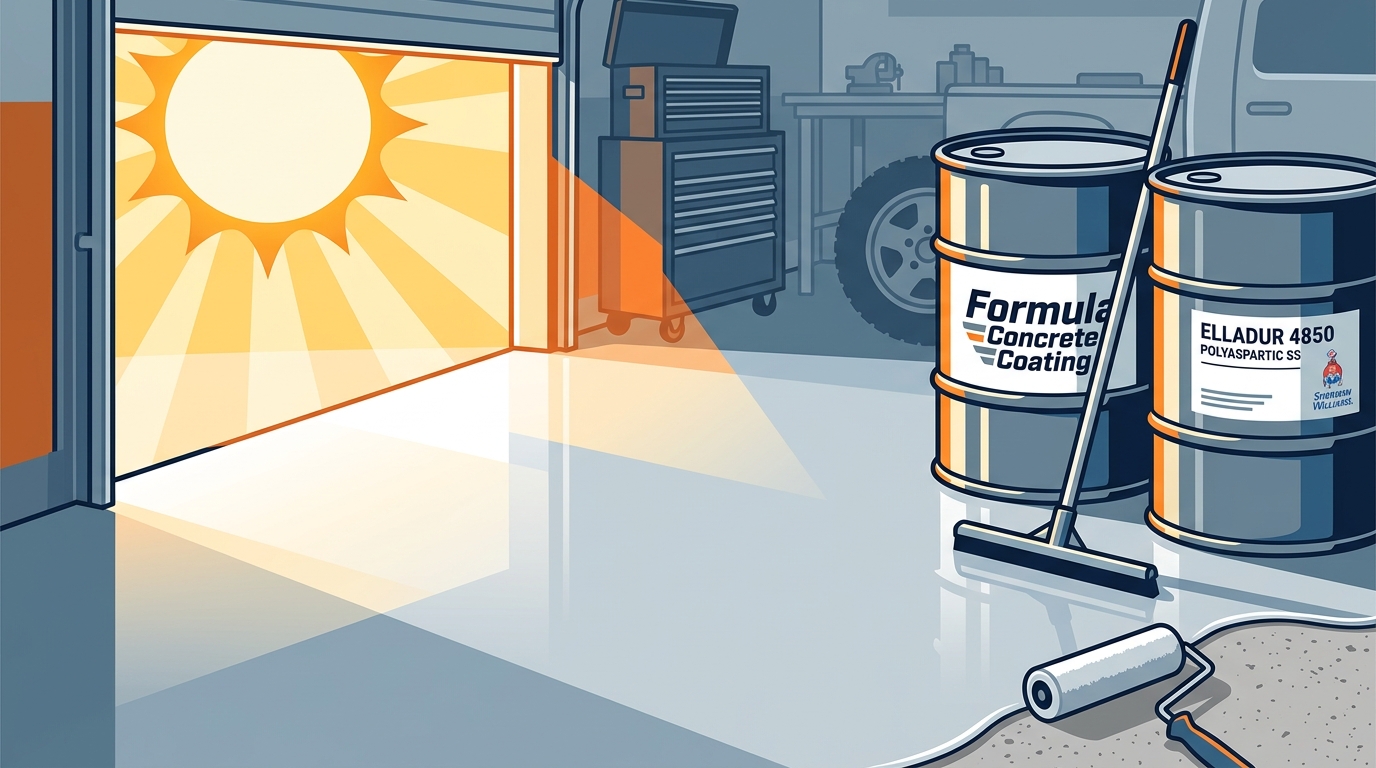
Sherwin-Williams ELLADUR 4850
The ELLADUR 4850 is a high-performance polyaspartic topcoat. It is designed for heavy-duty applications and offers excellent UV stability. This product is ideal for garages that see significant sunlight. The ELLADUR 4850 provides a durable, glossy finish that resists wear and tear. It is a key component in the product datasheets available on our website. This specific formulation is chosen for its ability to handle the harsh Texas climate.
ResuPrime and ResuFlor Systems
While the topcoat handles UV exposure, the primer and base coat are equally important. The ResuPrime 3830/3835 is a high-build primer that ensures adhesion. The ResuFlor 3569 is a multi-purpose epoxy that serves as a robust base. These products work together to create a cohesive system. The garage floor coatings offered by Formula Concrete Coating Austin utilize these specific Sherwin-Williams products. This ensures that every layer of the system is compatible and high-performing.
Why Brand Matters
Generic or unbranded coatings often lack the rigorous testing and quality control of major manufacturers. They may use lower-grade resins that degrade quickly. By sticking to a single, high-quality brand, Formula Concrete Coating Austin ensures consistency. This approach eliminates the guesswork for homeowners. You know exactly what is being applied to your floor. This transparency is a core value of the company.
The Critical Role of Surface Preparation
Even the best polyaspartic coating will fail if the substrate is not properly prepared. Surface preparation is the foundation of a successful coating project. Formula Concrete Coating Austin utilizes a meticulous 4-point surface preparation process. This process includes moisture testing, diamond grinding, crack repair, and thorough cleaning. Each step is critical to ensuring optimal adhesion and long-lasting performance.
Moisture Testing
Moisture is the enemy of concrete coatings. If moisture is present in the slab, it can cause the coating to bubble or peel. Moisture testing is a non-negotiable step in the preparation process. It ensures that the slab is dry enough to accept the coating. This step is often skipped by less experienced contractors, leading to premature failure. Formula Concrete Coating Austin prioritizes this step to guarantee a durable result.
Diamond Grinding
Diamond grinding is a mechanical process that opens up the pores of the concrete. It removes laitance, which is a weak layer of cement and water on the surface. This creates a rough profile that allows the primer to bond mechanically. Without proper grinding, the coating may not adhere correctly. This step is essential for achieving a long-lasting finish. It is a key part of the highest quality, lowest price guarantee offered by the company.
Crack Repair
Cracks in the concrete can telegraph through the coating. They can also allow moisture to penetrate the substrate. Proper crack repair is essential to prevent these issues. Formula Concrete Coating Austin repairs cracks before applying the coating. This ensures a smooth, uniform surface. It also prevents future structural issues. This attention to detail is what sets professional installations apart from DIY attempts.
Comparing Coating Types for Texas Climates
Understanding the differences between coating types helps homeowners make informed decisions. The table below compares the key characteristics of epoxy, polyaspartic, and polyurea coatings in the context of Texas sun exposure.
| Coating Type | UV Stability | Cure Time | Flexibility | Best For |
|---|---|---|---|---|
| Epoxy | Low (Yellows easily) | Slow (24-72 hours) | Rigid | Indoor, low-sun areas |
| Polyaspartic | High (UV-stable) | Fast (4-8 hours) | Flexible | Garages, patios, high-sun areas |
| Polyurea | Medium | Very Fast (Minutes) | Very Flexible | Industrial, rapid cure needs |
Polyaspartic coatings offer the best balance of UV stability, cure time, and flexibility for residential garages in Texas. They are the preferred choice for homeowners who want a durable, long-lasting finish. The concrete floor coating FAQ provides more details on these differences. This comparison helps clarify why polyaspartic is the top choice for sun-exposed areas.
Maintenance and Longevity in High-Heat Zones
Proper maintenance extends the life of your coated floor. In high-heat zones, maintenance is even more critical. Formula Concrete Coating Austin provides a floor care guide to help homeowners keep their floors looking new. Regular cleaning and inspection are key to maintaining the integrity of the coating.
Cleaning Best Practices
Use mild soap and water for regular cleaning. Avoid harsh chemicals that can degrade the coating. Sweep the floor regularly to remove abrasive debris. This prevents scratches and wear. A well-maintained floor will last significantly longer. This simple routine is easy to follow and effective.
Inspection and Repair
Inspect the floor annually for signs of wear or damage. Look for cracks, peeling, or discoloration. Address any issues promptly to prevent them from worsening. Early detection can save money and extend the life of the coating. Formula Concrete Coating Austin offers warranty protection to give homeowners peace of mind. This ensures that any issues are covered under the warranty terms.
Longevity Expectations
A well-installed and maintained polyaspartic coating can last for many years. In Texas, the lifespan may be slightly shorter due to the harsh climate, but it is still significantly longer than uncoated concrete. The key is to choose a high-quality product and a professional installer. This combination ensures the best possible outcome. Homeowners can expect a durable, beautiful floor for years to come.
Key Takeaways
- UV Stability is Critical: Choose a polyaspartic coating with aliphatic resins to prevent yellowing and chalking in Texas sun.
- Brand Matters: Use trusted brands like Sherwin-Williams for consistent quality and performance.
- Surface Prep is Non-Negotiable: Moisture testing, diamond grinding, and crack repair are essential for adhesion.
- Flexibility Prevents Cracking: Polyaspartic coatings are more flexible than epoxies, reducing the risk of cracking in high-heat zones.
- Fast Cure Times: Polyaspartic coatings cure quickly, allowing for faster project completion.
- Maintenance Extends Life: Regular cleaning and inspection help maintain the integrity of the coating.
- Professional Installation: Hire a certified professional to ensure proper application and warranty coverage.
- Transparency is Key: Choose a contractor who uses specific, named products and provides clear pricing.
Frequently Asked Questions
What is the best polyaspartic coating for Texas sun?
The best polyaspartic coating for Texas sun is a UV-stable, aliphatic formulation. Formula Concrete Coating Austin uses Sherwin-Williams ELLADUR 4850 for this purpose. This product is specifically designed to resist yellowing and chalking under intense sunlight.
How long does a polyaspartic coating last in Texas?
A well-installed and maintained polyaspartic coating can last for many years in Texas. The exact lifespan depends on the quality of the installation and the level of maintenance. Regular cleaning and inspection can extend the life of the coating.
Can I use epoxy instead of polyaspartic in a sun-exposed garage?
Epoxy is not recommended for sun-exposed garages because it yellows easily under UV exposure. Polyaspartic is a better choice for these areas because it is UV-stable. If you use epoxy, it should be covered with a UV-stable topcoat.
What is the role of surface preparation in coating longevity?
Surface preparation is critical for coating longevity. It ensures that the coating adheres properly to the concrete. Without proper preparation, the coating may peel or bubble. Formula Concrete Coating Austin uses a 4-point surface preparation process to ensure optimal adhesion.
How do I clean a polyaspartic coated floor?
Clean a polyaspartic coated floor with mild soap and water. Avoid harsh chemicals that can degrade the coating. Sweep the floor regularly to remove abrasive debris. This simple routine helps maintain the integrity of the coating.
Does Formula Concrete Coating Austin offer a warranty?
Yes, Formula Concrete Coating Austin offers comprehensive warranties for their work. This gives homeowners peace of mind and ensures that any issues are covered under the warranty terms. The warranty details are available on the company's website.
Conclusion
Choosing the right polyaspartic garage floor coating is essential for protecting your investment in Texas. The key is to select a UV-stable, aliphatic formulation from a trusted brand. Formula Concrete Coating Austin provides this solution with their exclusive use of Sherwin-Williams products. Their commitment to high-quality surface preparation and professional installation ensures a durable, long-lasting finish. For homeowners in the Austin metro area, this is the best way to achieve a beautiful, functional garage floor that withstands the Texas sun. To plan your visit, for a free quote and consultation.