Key Cost Factors: Preparation and Moisture
Many homeowners assume the price of concrete coating is simply the cost of the paint. In reality, the most significant variable in your final invoice is surface preparation. Surface preparation is the process of cleaning, grinding, and repairing concrete to ensure the coating adheres properly. Without this step, even the most expensive resin will peel or chip within months. In Austin, where concrete is often exposed to extreme temperature swings, proper prep is non-negotiable.
The 4-Point Preparation Process
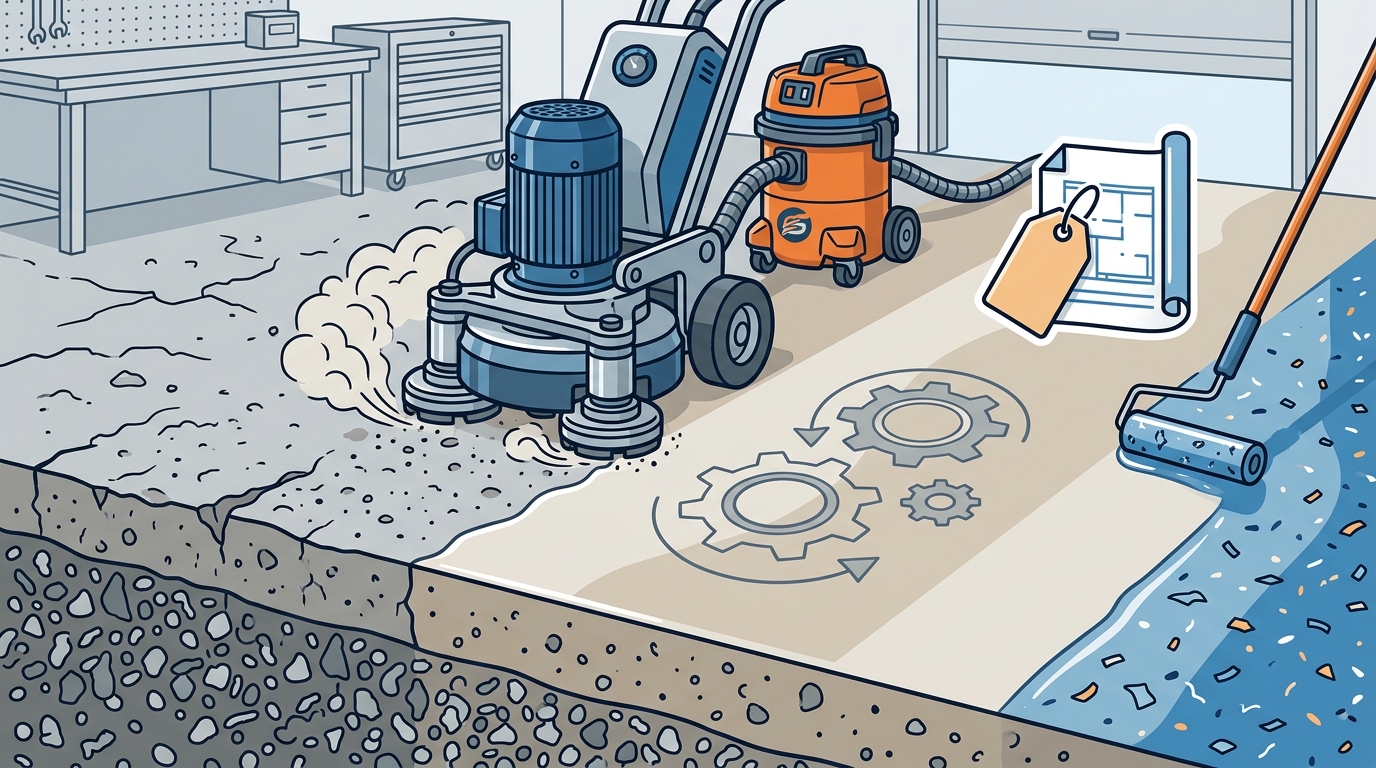
Professional installers, such as Formula Concrete Coating Austin, utilize a rigorous 4-point surface preparation process. This includes moisture testing, diamond grinding, crack repair, and thorough cleaning. Diamond grinding is particularly critical in the Austin climate. It removes the weak, chalky top layer of concrete and creates a micro-texture that allows the coating to bond mechanically. If a contractor skips grinding to save money, you are paying for a short-term fix, not a long-term solution.
Moisture Testing and Vapor Barriers
Moisture testing is a diagnostic procedure that measures the amount of water vapor moving through the concrete slab. Austin’s high humidity and frequent rain can cause moisture to rise from the soil beneath the slab. If this vapor is not addressed, it will push the coating off the surface, causing bubbling and delamination. A reputable installer will perform a quantitative moisture test, often using a calcium carbide or relative humidity probe. If the moisture levels are high, a vapor barrier or moisture-mitigating primer is required. This adds to the cost but is essential for the longevity of your investment.
Epoxy vs. Polyaspartic: Price and Performance
The choice of resin is the second major cost driver. The two primary options for residential garages are epoxy and polyaspartic. Each has distinct characteristics that affect both the price and the final performance of the floor.
Epoxy Coatings
Epoxy is a type of polymer formed through a chemical reaction between an epoxide resin and a polyamine hardener. Epoxy is generally the more affordable option, often priced at the lower end of the spectrum. It offers excellent chemical resistance and durability. However, traditional epoxy is susceptible to UV degradation. If your garage has windows or is open to the sun, an epoxy floor may yellow or chalk over time. It also has a longer cure time, meaning you cannot use the garage for several days after installation.
Polyaspartic Coatings
Polyaspartic is a type of polyurea coating derived from the reaction of an aliphatic polyisocyanate component with a polyaspartic ester resin. Polyaspartic is typically more expensive than epoxy but offers superior UV stability and flexibility. It cures much faster, often allowing you to walk on the floor within 24 hours. This rapid cure time is a significant advantage in Austin, where weather windows can be unpredictable. The higher cost of polyaspartic is justified by its ability to maintain its color and gloss for years, even in direct sunlight.
| Feature | Epoxy | Polyaspartic |
|---|---|---|
| UV Stability | Poor (Yellows over time) | Excellent (UV Stable) |
| Cure Time | 3 - 7 Days | 24 - 48 Hours |
| Flexibility | Rigid | Flexible |
| Best For | Interior, shaded garages | Exterior, sun-exposed garages |
The Austin Market: Local Variables
While national averages provide a baseline, local market conditions in the Austin metropolitan area significantly impact pricing. Austin’s unique climate and housing stock create specific challenges that must be accounted for in your budget.
Climate and Concrete Condition
Austin experiences extreme heat and humidity. This environment accelerates the deterioration of uncoated concrete. Many homes in the area, particularly those built in the 1990s and 2000s, have concrete slabs that are already cracked or spalled. Repairing this damage before coating adds to the cost. A professional installer will assess the slab’s integrity and recommend necessary repairs, such as crack injection or resurfacing, to ensure a stable base.
Geographic Variations
Prices can vary slightly depending on your specific location within the service area. Formula Concrete Coating Austin serves a wide range of communities, including Pflugerville, Round Rock, Leander, and Lakeway. While the core materials and labor costs are consistent, travel time and local demand can influence the final quote. However, reputable companies like Formula Concrete Coating Austin offer transparent pricing and a lowest price guarantee, ensuring that you are not overcharged due to geographic factors.
Hidden Costs to Avoid
When comparing quotes, it is crucial to look beyond the bottom line. Low-ball quotes often hide critical costs that will emerge during the project. Understanding these hidden costs helps you avoid surprises and ensures you are comparing apples to apples.
Inadequate Surface Preparation
As mentioned earlier, skipping diamond grinding or moisture testing is a common way to lower the initial quote. These steps are not optional; they are the foundation of a successful installation. If a quote does not explicitly include diamond grinding and moisture testing, it is likely a red flag. You may save money upfront, but you will likely pay more in the long run if the coating fails.
Material Quality
Not all coatings are created equal. Some contractors use low-grade, thin-film coatings that are cheaper to apply but lack durability. Formula Concrete Coating Austin exclusively uses premium materials from trusted brands, such as Sherwin-Williams. These products are engineered for performance and longevity. While they may cost more per gallon, they provide better coverage, durability, and aesthetic results. Always ask for the specific product names and datasheets before signing a contract.
Labor and Warranty
Labor costs reflect the skill and experience of the installers. Certified technicians with years of experience command higher rates, but they also deliver a higher quality finish. Additionally, a comprehensive warranty is a sign of confidence in the work. Formula Concrete Coating Austin stands behind its work with comprehensive warranties, ensuring your peace of mind. Avoid contractors who offer no warranty or only a limited one.
Key Takeaways
- Surface preparation, including diamond grinding and moisture testing, is the most significant cost factor.
- Epoxy is more affordable but less UV stable; polyaspartic is pricier but more durable and faster-curing.
- Austin’s climate requires rigorous moisture testing to prevent coating failure.
- Low-ball quotes often hide costs related to inadequate preparation or low-quality materials.
- Always request a detailed quote that breaks down preparation, materials, and labor.
- Choose a contractor with a proven track record and a comprehensive warranty.
- Formula Concrete Coating Austin offers the highest quality at the lowest price, guaranteed.
Frequently Asked Questions
How much does it cost to coat a garage floor in Austin?
What is the difference between epoxy and polyaspartic?
Epoxy is a rigid, affordable coating that can yellow in sunlight. Polyaspartic is a flexible, UV-stable coating that cures faster and is more durable, but costs more.
Why is surface preparation so important?
Surface preparation ensures the coating adheres to the concrete. Without proper grinding and cleaning, the coating will peel or chip. It is the most critical step in the process.
How long does the installation process take?
Most residential garage projects can be completed in one to two days. Epoxy requires several days to cure, while polyaspartic can be walked on within 24 hours.
Do I need to move my car out of the garage?
Yes, the garage must be completely empty during the installation process. You will need to store your vehicle elsewhere for a few days, depending on the cure time of the chosen coating.
Is a warranty included with the coating?
Reputable contractors, like Formula Concrete Coating Austin, offer comprehensive warranties. Always ask for the warranty terms in writing before signing a contract.
Can I paint over an existing epoxy floor?
It is generally not recommended to paint over epoxy. The surface is too smooth for proper adhesion. It is better to grind down the existing epoxy and apply a new coating.
How do I maintain my coated garage floor?
Maintenance is simple. Sweep or vacuum regularly and mop with a mild detergent. Avoid harsh chemicals and abrasive scrubbers, which can damage the coating.
Conclusion
Understanding the true cost of concrete coating in Austin requires looking beyond the price per square foot. It involves evaluating the quality of surface preparation, the type of resin used, and the reputation of the installer. By prioritizing proper moisture testing and diamond grinding, you ensure that your investment lasts for years. Formula Concrete Coating Austin is committed to providing transparent pricing and premium materials, ensuring you get the best value in the market. To plan your visit, for a free, no-obligation quote today.