Concrete Preparation Factors
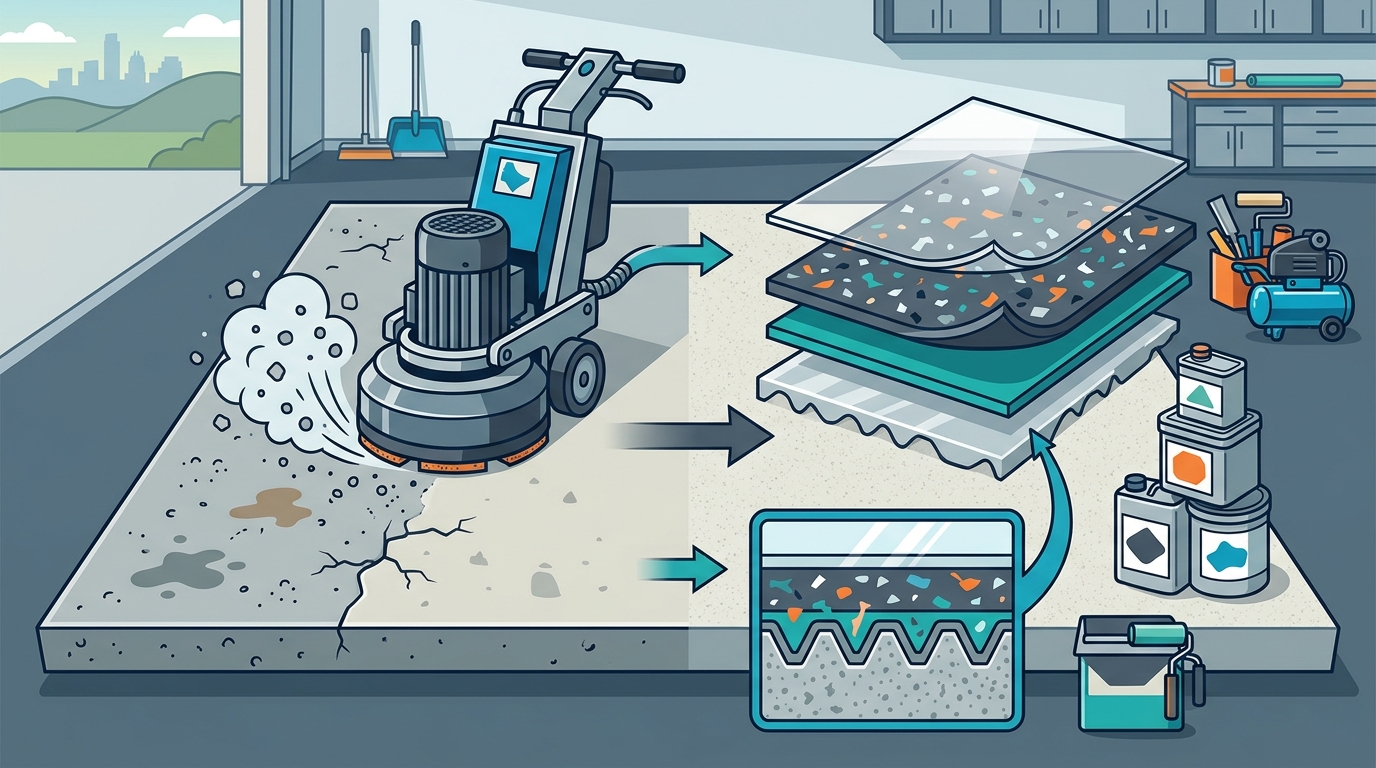
Surface preparation is the single most significant variable in determining the final cost of a garage floor coating. A professional installer cannot simply pour product over existing concrete. The substrate must be sound, clean, and properly profiled to ensure adhesion. Concrete preparation is the process of grinding, cleaning, and repairing the substrate to create a surface capable of bonding with the coating. In Austin, where humidity and temperature fluctuations can affect concrete integrity, this step is non-negotiable.
Grinding and Profiling
Most professional installations require diamond grinding. This process removes the top layer of sealed or contaminated concrete, exposing fresh, porous material. Grinding also creates a profile that increases the surface area for mechanical bonding. If your garage floor has a previous coating, such as paint or a failed epoxy, the cost of removal will be higher. Grinding is labor-intensive and requires specialized equipment, which contributes to the per-square-foot rate.
Crack Repair and Moisture Testing
Before applying any resin, the installer must assess the structural health of the slab. Hairline cracks are common in Austin homes due to soil movement and thermal expansion. These cracks must be routed and filled with a flexible filler to prevent the coating from cracking along the same lines. Additionally, moisture testing is critical. If the slab has high moisture vapor transmission, a standard coating may blister or peel. A reliable contractor will perform a calcium chloride test or a relative humidity test. If moisture is present, a moisture mitigation system may be required, which adds to the project cost.
Material Science: Epoxy vs. Polyaspartic
Understanding the material you are buying is essential for interpreting quotes. Many homeowners confuse epoxy and polyaspartic, but they are chemically distinct products with different performance characteristics and price points. Polyaspartic is a type of polyurea coating derived from the reaction of an aliphatic polyisocyanate component with a polyaspartic ester resin. This chemical structure gives it unique properties that justify its higher cost compared to standard epoxy.
Cure Time and UV Stability
One of the primary reasons homeowners choose polyaspartic is its rapid cure time. While traditional epoxy may require 24 to 72 hours before foot traffic and up to seven days for full cure, polyaspartic can often be walked on within 24 hours and driven on within 48 hours. This is a significant advantage for busy households. Furthermore, polyaspartic is UV stable. Standard epoxy yellows and degrades when exposed to sunlight. If your garage has windows or is used as a workspace with natural light, polyaspartic will maintain its color integrity far longer than epoxy.
Durability and Chemical Resistance
Labor and Installation Complexity
Labor accounts for a significant portion of the total project cost. The complexity of the installation process directly impacts the number of hours required, which in turn affects the price. Installation complexity is the measure of the difficulty and time required to apply a coating system to a specific substrate. A simple, flat garage with a new slab will cost less than a garage with multiple levels, stairs, or existing damage.
Garage Size and Layout
The square footage of your garage is the baseline for cost calculation. A standard single-car garage in Austin is approximately 400 to 500 square feet. A double-car garage is typically 800 to 1,000 square feet. However, the layout matters. A garage with a sloped floor, multiple doorways, or intricate corners requires more time to apply the coating evenly. Installers must work carefully around edges and details, which slows down the process. If your garage has a basement or a lower level, the labor cost will increase due to the difficulty of moving equipment and materials.
Weather and Scheduling
Austin weather can impact installation timelines. Polyaspartic coatings are sensitive to temperature and humidity. If the ambient temperature is too low or the humidity is too high, the cure time can be affected. Professional installers will monitor these conditions and may need to adjust their schedule. This can lead to delays, which may impact the final cost if the project spans multiple days. Scheduling flexibility is important, and homeowners should be prepared for potential weather-related adjustments.
Decorative Finishes and Aesthetics
The aesthetic finish of your garage floor can significantly impact the final cost. While a solid color is the most economical option, decorative finishes offer a higher level of customization and visual appeal. Decorative finishes are additive elements, such as flakes or quartz, incorporated into the coating to create a textured, multi-toned surface. These finishes not only look better but also provide additional slip resistance and hide minor imperfections in the concrete.
Flake Systems
Flake systems are the most popular decorative option for garage floors. They involve broadcasting colored flakes into the wet coating before applying a clear topcoat. The flakes create a random, multi-toned pattern that is visually appealing and durable. The cost of a flake system is typically higher than a solid color due to the additional material and labor required. The size and color of the flakes can also affect the price. Larger flakes or custom color blends may cost more than standard options.
Quartz and Metallic Finishes
For a more luxurious look, some homeowners opt for quartz or metallic finishes. Quartz adds a granular texture that enhances slip resistance and durability. Metallic finishes create a swirling, liquid-like effect that is highly unique. These finishes are more expensive than standard flakes and require a higher level of skill to apply correctly. If you are considering a high-end finish, it is important to work with an experienced installer who has a portfolio of similar projects.
Cost Comparison Table
The following table summarizes the typical cost ranges for different garage floor coating options in the Austin, TX, market. These estimates include materials and professional installation. Actual costs may vary based on specific project conditions. according to Laker Business Directory
| Coating Type | Cost per Sq Ft | Cure Time | UV Stability | Best For |
|---|
Key Takeaways
- Surface preparation, including grinding and crack repair, is the most significant cost variable and should not be skipped.
- Polyaspartic offers faster cure times and better UV stability than standard epoxy, making it ideal for residential garages.
- Decorative finishes like flakes and quartz increase the cost but enhance aesthetics and slip resistance.
- Garage size and layout complexity directly impact labor costs and total project price.
- Always request a detailed quote that breaks down preparation, materials, and labor costs.
- Consider the long-term value of a professional installation over a DIY kit, which often fails due to improper preparation.
Frequently Asked Questions
How much does a polyaspartic garage floor cost in Austin?
Is polyaspartic worth the extra cost over epoxy?
For most residential applications, yes. Polyaspartic cures faster, is more flexible, and does not yellow in sunlight. While the upfront cost is slightly higher than standard epoxy, the performance benefits and longevity often make it a better investment for homeowners.
How long does the installation process take?
A typical polyaspartic garage floor installation takes one to two days. Surface preparation, including grinding and crack repair, usually takes the first day. The coating is applied on the second day, and the floor is ready for foot traffic within 24 hours.
Can I install polyaspartic myself?
While DIY kits are available, professional installation is strongly recommended. Proper surface preparation is critical for adhesion, and mistakes in this step can lead to peeling or blistering. Professional installers have the equipment and expertise to ensure a durable, long-lasting finish.
How long does a polyaspartic floor last?
A professionally installed polyaspartic floor can last 10 to 20 years or more with proper maintenance. The durability of the coating depends on the quality of the materials, the skill of the installer, and the level of care taken during use.
What is the difference between polyaspartic and polyurea?
Polyaspartic is a type of polyurea, but it is modified to be more flexible and easier to apply. Polyurea is generally harder and more chemically resistant, making it better suited for industrial applications. Polyaspartic is more commonly used for residential and light commercial projects due to its aesthetic versatility and ease of application.